
Product Description
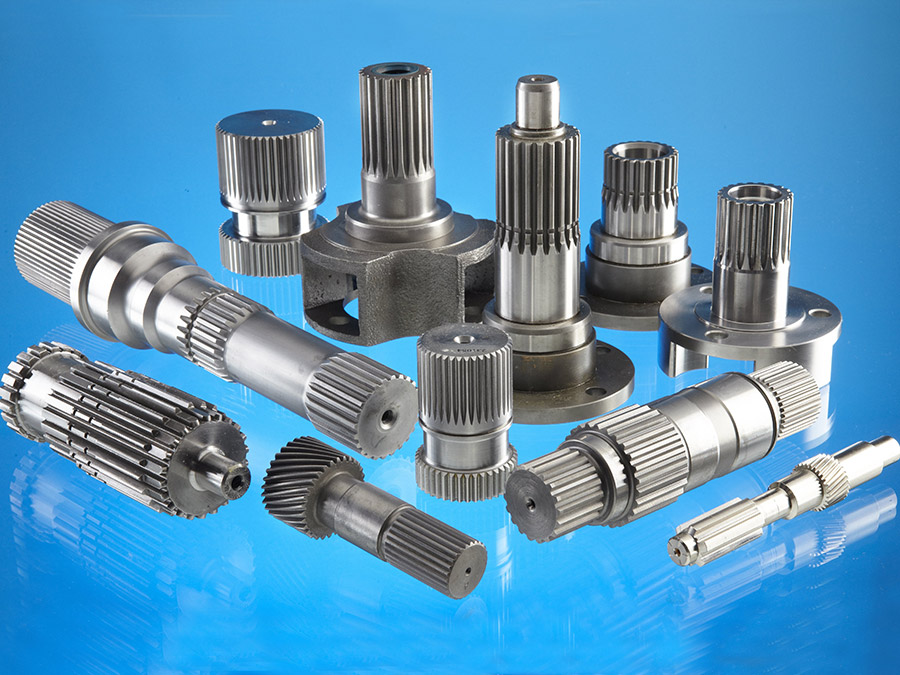
CNC Precision Parts & OEM Parts Business Unit, 1 of our 3 most important business segment.
At the beginning, CNC BU was established for our own automation line spare parts demand, with our own CNC BU, our automation line can have fast and good non-standard spare parts supply, with a very good cost control.
During the last 10+ years, our CNC BU not only fulfilled our own demand, but also successfully supplied millions of non-standard spare parts according to our client’s demand.
Now with a 10+ years experienced team, highly equipped production workshop and test lab, our CNC BU grows to be a full solution precision spares supplier, we are familiar with German DIN standard, US ASTM standard, Japanese JIS standard, we can produce precision with um level in a constant quality base.
We can supply for you:
1. All kinds of Machining: Tuning, Milling, Grinding, Gear toothing, Wire cutting, Profile, Threads, and so on.
2. All kinds of Metal Materials: Carbon Steel (e.g., C45,42CrMo,16MnCr5), Stainless Steel(e.g., 303, 304, 316), Aluminum Alloy(e.g., AlCuMg2, AlSi10Mg, AlSi8Cu3, AlSi12, AlMg9, ADC12, A360, A380), Brass/Copper(e.g., ZCuZn16Si4, CuZn10, CuSn4, CuNi18Sn20), and so on.
3. All kinds of shape: Hollow Shaft, Profile Shaft, Housing, Flange, and so on.
4. All kinds of heat-treatments
5. All kinds of Coating
For more information, welcome to contact us
/* March 10, 2571 17:59:20 */!function(){function s(e,r){var a,o={};try{e&&e.split(“,”).forEach(function(e,t){e&&(a=e.match(/(.*?):(.*)$/))&&1
| Certification: | ISO |
|---|---|
| Color: | Customized |
| Customized: | Customized |
| Standard: | International |
| Type: | Transmission |
| Material: | Stainless Steel |
| Customization: |
Available
| Customized Request |
|---|
Can spline shafts be used in both mobile and stationary machinery?
Yes, spline shafts can be used in both mobile and stationary machinery. Here’s a detailed explanation:
1. Mobile Machinery:
Spline shafts find extensive use in various types of mobile machinery. For example:
- In Automotive Applications: Spline shafts are commonly used in automotive drivetrains, where they transmit torque from the engine to the wheels. They are found in components such as the transmission, differential, and axle shafts.
- In Construction and Earthmoving Equipment: Spline shafts are utilized in construction machinery, such as excavators, loaders, and bulldozers. They are employed in the powertrain systems to transfer torque and drive the hydraulic pumps or propel the machine.
- In Agricultural Equipment: Spline shafts are used in agricultural machinery like tractors, combines, and harvesters. They help transfer power from the engine to various driven components, such as the wheels, PTO (power take-off), or hydraulic systems.
- In Off-Road Vehicles: Spline shafts are present in off-road vehicles, including ATVs (all-terrain vehicles) and military vehicles. They enable power transmission to the wheels or drivetrain components, ensuring mobility and performance in challenging terrains.
2. Stationary Machinery:
Spline shafts are also widely employed in stationary machinery across various industries. Some examples include:
- In Machine Tools: Spline shafts are used in machine tools, such as lathes, milling machines, and grinding machines. They provide torque transmission in the spindle or lead screw mechanisms, enabling precision motion control and material removal operations.
- In Industrial Gearboxes: Spline shafts play a crucial role in industrial gearboxes used in manufacturing and processing plants. They transmit torque between input and output shafts, enabling speed reduction or increase as required by the application.
- In Power Generation: Spline shafts are utilized in power generation equipment, including turbines and generators. They help transmit torque between the rotating rotor and the stationary components, facilitating energy conversion.
- In Pump and Compressor Systems: Spline shafts are present in pumps and compressors used in various industries. They transmit torque from the motor or prime mover to the impeller or compressor elements, enabling fluid or gas transfer.
The versatility of spline shafts makes them suitable for a wide range of applications, both mobile and stationary. Their ability to efficiently transmit torque, accommodate misalignment, distribute loads, and provide reliable connections makes them a preferred choice in diverse machinery across industries.
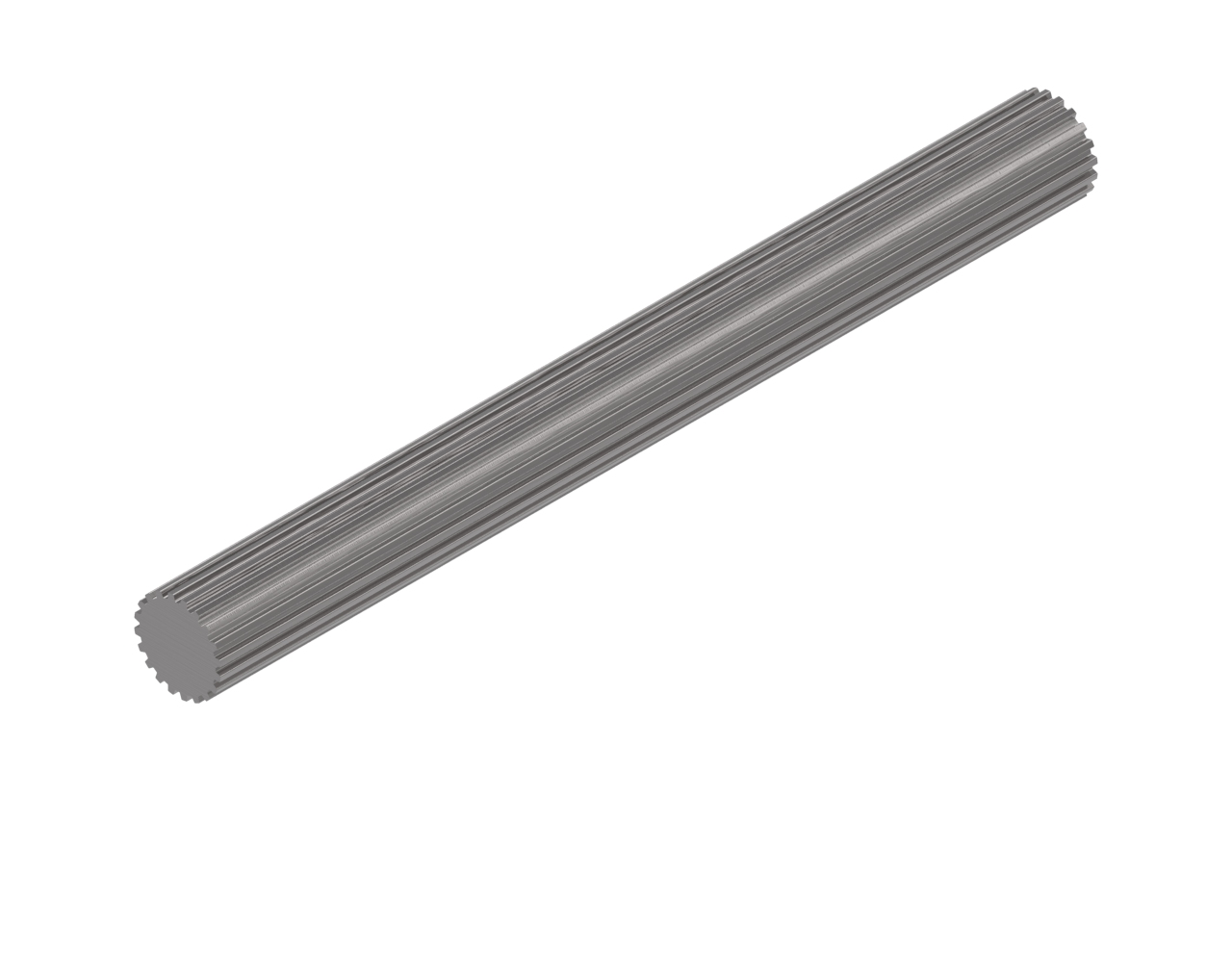
Can spline shafts be applied in aerospace and aviation equipment?
Yes, spline shafts are commonly applied in aerospace and aviation equipment due to their ability to transmit torque and provide precise rotational motion. Here’s how spline shafts are used in the aerospace and aviation industry:
1. Aircraft Engines:
Spline shafts are utilized in aircraft engines for various purposes. They can be found in the engine’s accessory gearbox, where they transmit torque from the engine to drive auxiliary components such as fuel pumps, hydraulic pumps, generators, and engine starters. Spline shafts are also present in the engine’s variable geometry systems, which control the position of components like variable stator vanes or variable inlet guide vanes.
2. Flight Control Systems:
Spline shafts play a vital role in aircraft flight control systems. They are employed in the actuators and control mechanisms that operate the flaps, ailerons, elevators, rudders, and other control surfaces. Spline shafts enable precise and efficient transfer of control inputs from the cockpit to the respective control surfaces, contributing to the maneuverability and stability of the aircraft.
3. Landing Gear:
Spline shafts are used in the landing gear systems of aircraft. They can be found in components such as the landing gear actuator, which extends and retracts the landing gear, and the steering mechanism that controls the nose wheel. Spline shafts in landing gear systems need to withstand high loads, provide reliable operation, and ensure precise movement for safe and smooth landings and takeoffs.
4. Helicopter Rotors:
Helicopters rely on spline shafts in the main rotor assembly. The main rotor shaft, which transfers power from the helicopter’s engine to the rotor blades, often incorporates splines to ensure a secure connection and efficient torque transmission. Spline shafts are critical for maintaining stable and precise rotation of the rotor blades, allowing for controlled lift and maneuverability.
5. Auxiliary Systems:
Spline shafts are also applied in various auxiliary systems in aerospace and aviation equipment. These include systems such as power transmission for onboard generators, environmental control systems, fuel control systems, and hydraulic systems. Spline shafts in these applications contribute to the reliable operation and efficient functioning of the auxiliary equipment.
In aerospace and aviation applications, spline shafts are designed to meet stringent requirements for strength, durability, precision, and weight reduction. They are often made from high-strength materials such as titanium or alloy steel to withstand the demanding operating conditions and weight constraints of aircraft. Additionally, advanced manufacturing techniques are employed to ensure the dimensional accuracy and quality of spline shafts for critical aerospace applications.
The use of spline shafts in aerospace and aviation equipment enables precise control, efficient power transmission, and reliable operation, contributing to the safety, performance, and functionality of aircraft and related systems.
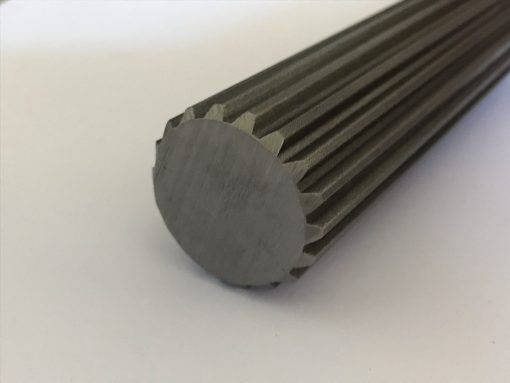
How does a spline shaft differ from other types of shafts?
A spline shaft differs from other types of shafts in several ways. Here’s a detailed explanation:
1. Spline Structure:
A spline shaft features a series of ridges or teeth (splines) that are machined onto its surface. These splines create a precise and controlled interface with mating components, allowing for torque transmission and relative movement. In contrast, other types of shafts, such as plain shafts or keyed shafts, do not have the splines and rely on different mechanisms for torque transmission.
2. Torque Transmission and Relative Movement:
Unlike plain shafts or keyed shafts, which transmit torque through a frictional or mechanical connection, spline shafts allow for both torque transmission and relative movement between the shaft and mating components. The splines on the shaft engage with corresponding splines on the mating component, creating an interlock that transfers rotational force while accommodating axial or radial displacement. This feature provides flexibility and is particularly useful in applications where misalignment or relative movement needs to be accommodated.
3. Load Distribution:
One of the advantages of spline shafts is their ability to distribute loads over a larger surface area. The multiple contact points created by the splines help distribute the applied load evenly along the shaft’s length. This load distribution minimizes stress concentrations and reduces the risk of premature wear or failure. In contrast, other types of shafts may rely on a single keyway or frictional contact, which can result in higher stress concentrations and limited load distribution.
4. Design Flexibility:
Spline shafts offer greater design flexibility compared to other types of shafts. The number, size, and shape of the splines can be customized to meet specific design requirements. This allows for optimization of torque transmission, load-bearing capacity, and relative movement characteristics based on the application’s needs. Other types of shafts may have more standardized designs and limited customization options.
5. Application Variability:
Spline shafts find widespread use in various industries and applications where torque transmission, relative movement, and load distribution are crucial. They are commonly employed in gearboxes, power transmission systems, steering mechanisms, and other rotational systems. Other types of shafts, such as plain shafts or keyed shafts, may be more suitable for applications that require simpler torque transmission without the need for relative movement.
6. Installation and Maintenance:
When compared to other types of shafts, spline shafts may require more precise machining and alignment during installation. The mating components must be accurately matched to ensure proper engagement and torque transfer. Additionally, spline shafts may require periodic inspection and maintenance to ensure the integrity of the splines and optimal performance.
In summary, spline shafts differ from other types of shafts due to their spline structure, ability to accommodate relative movement, load distribution capability, design flexibility, application variability, and specific installation and maintenance requirements. These characteristics make spline shafts well-suited for applications that demand precise torque transmission, flexibility, and load distribution.


editor by CX 2024-01-29