
Product Description
| Low Price Cnc Milling Machining Parts Service |
HangZhou TiZheJiang Machinery Co., Ltd. is a modern manufacturer specializing in providing stainless steel casting parts, stainless steel forging parts, aluminum casting parts, aluminum forging parts, aluminum cold extruded parts and other mechanical parts and hardware parts precision processing services, while strictly in accordance with the ISO9001 quality management system production. We have a full set of silica sol precision casting factory and precision machining factory, advanced precision machining center, production and testing equipment, experienced technical production and inspection personnel, skilled in customized parts, equipped with coordinate testing center to control product quality. And the integration of casting, forging, stamping and drawing, aluminum die casting, cold extrusion and other more than 100 outsourced factory production resources, can provide customers from mapping, mold design and manufacturing to production and processing, heat treatment, surface treatment, testing, packaging and other one-stop services.
Production products are used in a wide range, including pump body, valves, Marine hardware, high-speed cars, auto parts, excavator parts. There are exports of Japan’s stainless steel precision casting workpiece snow eliminators and water pump accessories, Italy’s refined stainless steel glass clips and faucet accessories, Germany’s stainless steel precision meat grinder, pipe joints and auto parts, France’s CHINAMFG cutting machine and food machinery accessories, the United States BMW and Mercedes-Benz CHINAMFG aluminum auto parts, zinc alloy high-pressure castings……
Under the premise of ensuring quality, the company optimizes processing technology, reduces production costs, and benefits customers and gets unanimous praise from customers.
|
Material: |
Aluminum (6061-T6, 6063, 7075-T6,5052) etc… Brass/Copper/Bronze etc… Stainless Steel (302, 303, 304, 316, 420) etc… Steel (mild steel, Q235, 20#, 45#) etc… Plastic (ABS, Delrin, PP, PE, PC, Acrylic) etc…
|
|
Process: |
CNC Machining, CNC turning, CNC milling, CNC lathe machining, CNC boring, CNC grinding, CNC drilling etc…
|
|
Surface treatment: |
Clear/color anodized; Hard anodized; Powder-coating; Sand-blasting; Painting; Nickel plating; Chrome plating; Zinc plating; Silver/gold plating; Black oxide coating, Polishing etc…
|
|
Gerenal Tolerance: (+/-mm) |
CNC Machining: 0.005 Turning: 0.005 Grinding(Flatness/in2): 0.003 ID/OD Grinding: 0.002 Wire-Cutting: 0.002
|
|
Certification: |
ISO9001:2008, ROHS
|
|
Production capacity: |
depend on complicacy of different products and the quantity
|
|
Experience: |
15 years of CNC machining products 3 years of automation machine manufacturing
|
|
Packaging : |
Standard: pearl cotton and bubble bag, carton box and seal For large and big quantity: pallet or as per customers’ requirement
|
|
Lead time : |
In general:7-15days
|
|
Term of Payment: |
T/T, Paypal, Trade Assurance etc…
|
|
Minimum Order: |
Comply with customer’s demand
|
|
Delivery way: |
Express(DHL,Fedex, UPS,TNT,EMS), By Sea, By air, or on your requirement |
/* January 22, 2571 19:08:37 */!function(){function s(e,r){var a,o={};try{e&&e.split(“,”).forEach(function(e,t){e&&(a=e.match(/(.*?):(.*)$/))&&1
| After-sales Service: | Support |
|---|---|
| Warranty: | Half Year |
| Condition: | New |
| Certification: | CE, RoHS, GS, ISO9001 |
| Standard: | DIN, ASTM, GOST, GB, JIS, ANSI, BS |
| Customized: | Customized |
| Customization: |
Available
| Customized Request |
|---|
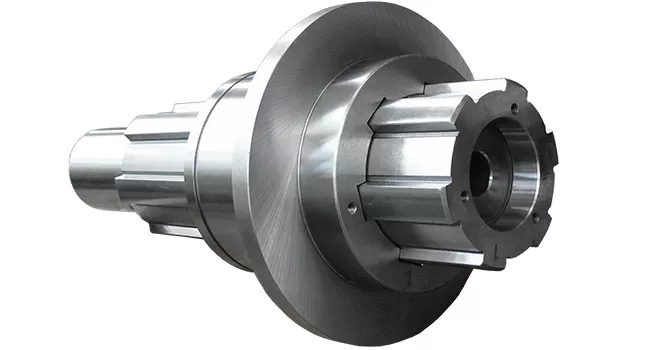
What are the different types of spline profiles and their applications?
Spline profiles are used in various applications to transmit torque and motion between mating components. Here’s a detailed explanation of different spline profiles and their applications:
1. Involute Splines:
Involute splines have a trapezoidal tooth profile that allows for smooth engagement and disengagement. They are widely used in power transmission applications, such as automotive gearboxes, where high torque transmission is required. Involute splines provide excellent load distribution and can accommodate misalignment.
2. Straight Sided Splines:
Straight sided splines have straight-sided teeth that provide efficient torque transmission and high torsional stiffness. They are commonly used in applications where precise positioning is required, such as machine tools, robotics, and aerospace systems. Straight sided splines offer accurate motion control and are resistant to misalignment.
3. Serrations:
Serrations are a type of spline profile with multiple teeth in the form of parallel ridges and grooves. They are often used in applications that involve axial or linear motion, such as indexing mechanisms, clamping systems, or power tools. Serrations provide secure locking and positioning capabilities.
4. Helical Splines:
Helical splines have teeth that are helically shaped, similar to helical gears. They offer smooth and gradual tooth engagement, resulting in reduced noise and vibration. Helical splines are commonly used in applications that require high torque transmission and where quiet operation is critical, such as heavy machinery, industrial equipment, and automotive drivetrains.
5. Crowned Splines:
Crowned splines have a modified tooth profile with a slight curvature along the tooth length. This design helps distribute the load evenly across the tooth surfaces, reducing stress concentrations and improving load-carrying capacity. Crowned splines are used in applications where high load capacity and resistance to wear are essential, such as heavy-duty gearboxes, marine propulsion systems, or mining equipment.
6. Ball Splines:
Ball splines incorporate recirculating ball bearings within the spline nut and grooves on the shaft. This design enables linear motion with low friction and high precision. Ball splines are commonly used in applications that require smooth linear motion, such as CNC machines, robotics, or linear actuators.
7. Custom Splines:
In addition to the standard spline profiles mentioned above, custom spline profiles can be designed for specific applications based on unique requirements. Custom splines can be tailored to optimize torque transmission, load distribution, misalignment compensation, or other specific performance parameters.
The choice of spline profile depends on factors such as the magnitude of torque, required accuracy, misalignment tolerance, noise and vibration considerations, and environmental conditions. Engineers and designers carefully select the appropriate spline profile to ensure optimal performance and reliability in the intended application.
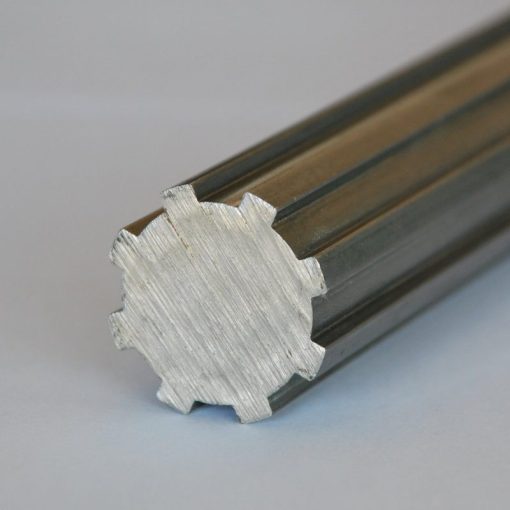
How do spline shafts handle variations in environmental conditions?
Spline shafts are designed to handle variations in environmental conditions and maintain their performance and reliability. Here’s a detailed explanation:
1. Temperature Variations:
Spline shafts are engineered to withstand a wide range of temperature variations. They are constructed from materials that exhibit good thermal stability, such as high-grade steels or alloys. These materials have low coefficients of thermal expansion, minimizing the effects of temperature changes on the shaft’s dimensional stability. Additionally, proper lubrication with temperature-resistant lubricants helps reduce friction and wear in the spline engagement, even under extreme temperature conditions.
2. Moisture and Corrosion Resistance:
Spline shafts can be designed to resist moisture and corrosion, ensuring their performance in humid or corrosive environments. Protective coatings, such as platings or surface treatments, can be applied to the shaft’s surfaces to enhance their resistance to moisture, oxidation, and corrosion. Additionally, selecting materials with inherent corrosion resistance, such as stainless steel or specialized alloys, can further enhance the spline shaft’s ability to handle environmental conditions.
3. Dust and Contaminant Protection:
Spline shafts used in environments with high levels of dust, dirt, or contaminants can be equipped with protective measures. Seals, gaskets, or covers can be employed to prevent the ingress of particles into the spline engagement. These protective measures help maintain the integrity of the spline profile, minimize wear, and ensure smooth operation even in dirty or dusty conditions.
4. Lubrication and Maintenance:
Proper lubrication is essential for the reliable operation of spline shafts, especially in challenging environmental conditions. Lubricants with appropriate viscosity and additives can be selected to provide effective lubrication and protection against wear, friction, and corrosion. Regular maintenance and lubrication intervals should be followed to ensure optimal performance and longevity of the spline shaft.
5. Shock and Vibration Resistance:
Spline shafts are designed to withstand shock and vibration encountered in various applications. The spline engagement and shaft design can incorporate features such as tighter tolerances, increased contact area, or damping elements to minimize the effects of shock and vibration. Additionally, proper fastening and mounting techniques help secure the shaft and reduce the risk of loosening or failure due to dynamic loads.
6. Environmental Sealing:
In certain applications where spline shafts are exposed to harsh environmental conditions, such as underwater or in chemical environments, environmental sealing can be employed. Sealing methods such as O-rings, gaskets, or specialized seals provide an additional barrier against external elements, ensuring the integrity and performance of the spline shaft.
7. Compliance with Standards:
Spline shafts used in specific industries or applications may need to comply with industry standards or regulations regarding environmental conditions. Manufacturers can design and test their spline shafts to meet these requirements, ensuring that the shafts can handle the specified environmental conditions and perform reliably.
By incorporating design considerations, appropriate materials, protective coatings, lubrication, and maintenance practices, spline shafts can effectively handle variations in environmental conditions. This enables them to maintain their functionality, performance, and longevity even in challenging operating environments.
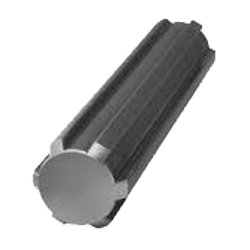
What are the key components and design features of a spline shaft?
A spline shaft consists of several key components and incorporates specific design features to ensure its functionality and performance. Here’s a detailed explanation:
1. Shaft Body:
The main component of a spline shaft is the shaft body, which provides the structural integrity and serves as the base for the spline features. The shaft body is typically cylindrical in shape and made from materials such as steel, stainless steel, or other alloyed metals. The material selection depends on factors like the application requirements, torque loads, and environmental conditions.
2. Splines:
The splines are the key design feature of a spline shaft. They are ridges or teeth that are machined onto the surface of the shaft. The splines create the interlocking mechanism with mating components, allowing for torque transmission and relative movement. The number, size, and shape of the splines can vary depending on the application requirements and design specifications.
3. Spline Profile:
The spline profile refers to the specific shape or geometry of the splines. Common types of spline profiles include involute, straight-sided, and serrated. The spline profile is chosen based on factors such as the torque transmission requirements, load distribution, and the desired engagement characteristics with mating components. The spline profile ensures optimal contact and torque transfer between the spline shaft and the mating component.
4. Spline Fit:
The spline fit refers to the dimensional relationship between the spline shaft and the mating component. It determines the clearance or interference between the splines, ensuring proper engagement and transmission of torque. The spline fit can be categorized into different classes, such as clearance fit, transition fit, or interference fit, based on the desired level of clearance or interference.
5. Surface Finish:
The surface finish of the spline shaft is crucial for its performance. The splines and the shaft body should have a smooth and consistent surface finish to minimize friction, wear, and the risk of stress concentrations. The surface finish can be achieved through machining, grinding, or other surface treatment methods to meet the required specifications.
6. Lubrication:
To ensure smooth operation and reduce wear, lubrication is often employed for spline shafts. Lubricants with appropriate viscosity and lubricating properties are applied to the spline interface to minimize friction, dissipate heat, and prevent premature wear or damage to the splines and mating components. Lubrication also helps in maintaining the functionality and prolonging the service life of the spline shaft.
7. Machining Tolerances:
Precision machining is critical for spline shafts to achieve the required dimensional accuracy and ensure proper engagement with mating components. Tight machining tolerances are maintained during the manufacturing process to ensure the spline profile, dimensions, and surface finish meet the specified design requirements. This ensures the interchangeability and compatibility of spline shafts in various applications.
In summary, the key components and design features of a spline shaft include the shaft body, splines, spline profile, spline fit, surface finish, lubrication, and machining tolerances. These elements work together to enable torque transmission, relative movement, and load distribution while ensuring the functionality, durability, and performance of the spline shaft.


editor by CX 2024-05-02