
Product Description
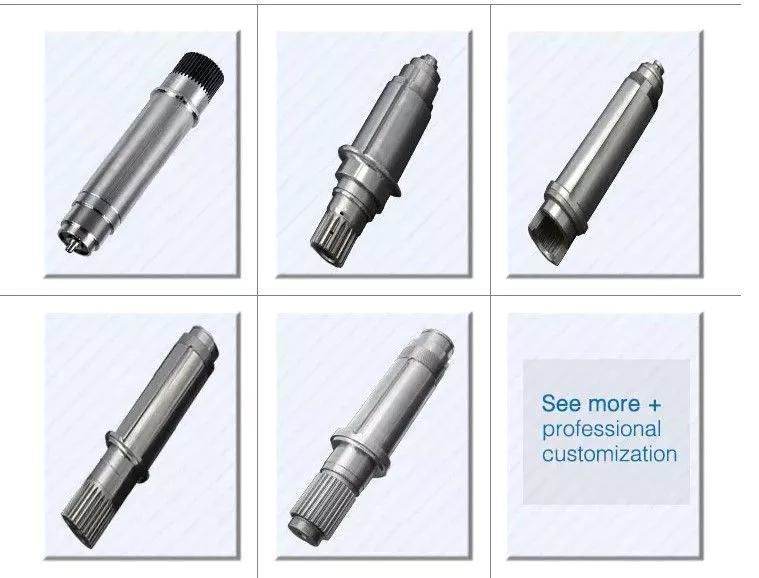
OEM Metal Shaft Stainless Steel Pin Propeller Linear Bearing Spline Shafts
Data Sheet
| Model NO. | Aofa PR01 |
Appearance Shape |
Round |
|
Journal Surface Roughness |
0.63-0.16μm
|
Tolerance |
ISO F7
|
|
Material Grade |
Ck45, 20mnv6, 42CrMo4
|
Roundness |
Dia.Tolerance/2
|
|
Axis Straightness |
0.1/1000mm
|
Hardened Depth |
0.5-3.5mm
|
|
Heat Treatment |
None, Induction Hardened, Q+T
|
Chrome Layer Hardness |
Min.800hv
|
|
Chrome Thickness |
15-50 Microns
|
Dia.Range |
Ø12-Ø320
|
|
Package |
Paper Sleeved, Shockproof Membrane, Wooden Case
|
Material Hardness |
HRC15, HRC30, HRC55 Can Be Choice
|
|
Length Option |
4m, 5.8m, 6m, 7.5m
|
Specification |
20GP, 40HQ
|
Product Showroom
Product Description
Pin shaft is a kind of standardized fastener, which can be statically fixed and connected with the connected part.
It is mainly used for the hinge of 2 parts to form a hinge connection.
Scope of application: engineering machinery, excavator, aerial work vehicle, various lifting platforms, forklift pile driver, driving, rail transit, shipbuilding industry, mining equipment, metallurgical equipment and other industries
Product Characteristics
The pin shaft is usually locked with a cotter pin, which is reliable and easy to disassemble. The surface of this product is treated by special grinding and hard chromium electroplating technology, and then polished by mirror. It has the characteristics of wear resistance and corrosion resistance.
HangZhou CZPT Machinery Co., LTD., formerly known as HangZhou Xihu (West Lake) Dis.n East CZPT Petrochemical Fitting Corporation, was founded in 1997. CZPT focus on the field of machinery manufacturing, committed to providing cylinder, flange (petrochemical accessories), pin, sheet metal parts and other mechanical products; Heat exchanger, ambient vaporizer, LNG handling arm and other gas engineering products for domestic sales and foreign trade import and export services. CZPT is a leading enterprise who collects production, foreign trade, sales and service. Relying on our technology, taking quality as the core and efficiency as the soul, we aim to bring the best quality mechanical products to our customers, and is committed to becoming a one-stop solution expert of mechanical parts. It is determined to become a one-stop service supplier integrating research and development, production and sales. Enterprises adhere to the “all for the customer” service purpose, implement the “customer first, quality first, service first” business philosophy, the use of omni-channel sales model, to build a global sales network, open CZPT machinery brand development road.
Aofa always follows the purpose of “providing value products for customers, providing development space for employees, and creating outstanding leading brands in the industry”, abides by the enterprise development concept of “creating value by heart”, and adheres to the mission of “manufacturing machinery high-quality products, creating a harmonious society”. The enterprise gathers many young and promising, positive people with lofty ideals, through the perfect management system and competitive incentive mechanism, aims to provide all-round development space for employees, and create a better future with the enterprise. Scientific management mode, intimate service attitude, for the enterprise to win credibility and public praise. In the fierce market competition to establish a good corporate image, and with many enterprises to establish long-term, stable strategic partnership, for the further development of the enterprise has laid a CZPT foundation.
Q1:Can you provide a sample before a big order?
A:Yes, we can .
Q2:Are you able to make Non-standard or customized air cylinders?
A:Yes, we can, we have our own factory, we can satisfy the customers’ demands
Q3:How long is the warranty?
A:We offer 12 months warranty time.
Q4:Can I have my brand on the products?
A:Of course you can.
Q5:What is your delivery time?
A:3-5days if we have stock, 15-25days if we have no stock.
Q6. Do you test all your goods before delivery?
A: Yes, we have 100% test before delivery
| After-sales Service: | 1 Year |
|---|---|
| Warranty: | 1 Year |
| Condition: | New |
| Certification: | CE |
| Customized: | Customized |
| Material: | Stainless Steel |
| Samples: |
US$ 10/Piece
1 Piece(Min.Order) | |
|---|
| Customization: |
Available
| Customized Request |
|---|
The Benefits of Spline Couplings for Disc Brake Mounting Interfaces
Spline couplings are commonly used for securing disc brake mounting interfaces. Spline couplings are often used in high-performance vehicles, aeronautics, and many other applications. However, the mechanical benefits of splines are not immediately obvious. Listed below are the benefits of spline couplings. We’ll discuss what these advantages mean for you. Read on to discover how these couplings work.
Disc brake mounting interfaces are splined
There are two common disc brake mounting interfaces – splined and six-bolt. Splined rotors fit on splined hubs; six-bolt rotors will need an adapter to fit on six-bolt hubs. The six-bolt method is easier to maintain and may be preferred by many cyclists. If you’re thinking of installing a disc brake system, it is important to know how to choose the right splined and center lock interfaces.
Aerospace applications
The splines used for spline coupling in aircraft are highly complex. While some previous researches have addressed the design of splines, few publications have tackled the problem of misaligned spline coupling. Nevertheless, the accurate results we obtained were obtained using dedicated simulation tools, which are not commercially available. Nevertheless, such tools can provide a useful reference for our approach. It would be beneficial if designers could use simple tools for evaluating contact pressure peaks. Our analytical approach makes it possible to find answers to such questions.
The design of a spline coupling for aerospace applications must be accurate to minimize weight and prevent failure mechanisms. In addition to weight reduction, it is necessary to minimize fretting fatigue. The pressure distribution on the spline coupling teeth is a significant factor in determining its fretting fatigue. Therefore, we use analytical and experimental methods to examine the contact pressure distribution in the axial direction of spline couplings.
The teeth of a spline coupling can be categorized by the type of engagement they provide. This study investigates the position of resultant contact forces in the teeth of a spline coupling when applied to pitch diameter. Using FEM models, numerical results are generated for nominal and parallel offset misalignments. The axial tooth profile determines the behavior of the coupling component and its ability to resist wear. Angular misalignment is also a concern, causing misalignment.
In order to assess wear damage of a spline coupling, we must take into consideration the impact of fretting on the components. This wear is caused by relative motion between the teeth that engage them. The misalignment may be caused by vibrations, cyclical tooth deflection, or angular misalignment. The result of this analysis may help designers improve their spline coupling designs and develop improved performance.
CZPT polyimide, an abrasion-resistant polymer, is a popular choice for high-temperature spline couplings. This material reduces friction and wear, provides a low friction surface, and has a low wear rate. Furthermore, it offers up to 50 times the life of metal on metal spline connections. For these reasons, it is important to choose the right material for your spline coupling.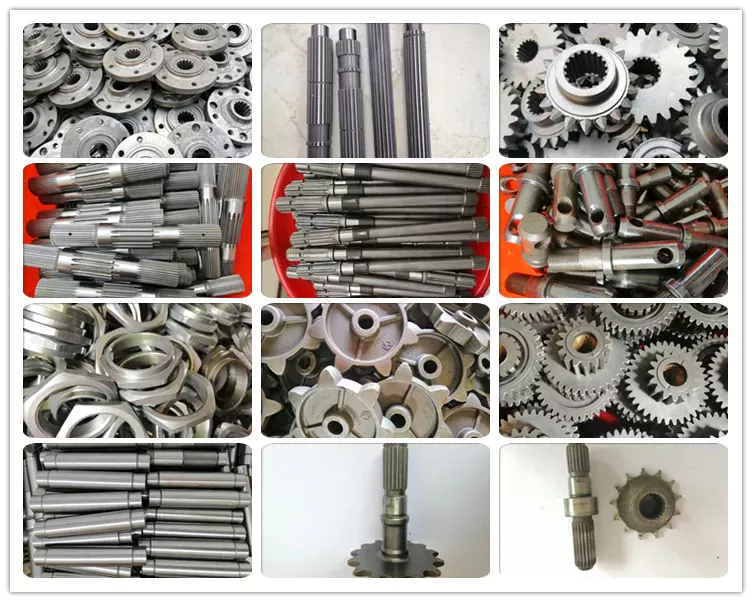
High-performance vehicles
A spline coupler is a device used to connect splined shafts. A typical spline coupler resembles a short pipe with splines on either end. There are two basic types of spline coupling: single and dual spline. One type attaches to a drive shaft, while the other attaches to the gearbox. While spline couplings are typically used in racing, they’re also used for performance problems.
The key challenge in spline couplings is to determine the optimal dimension of spline joints. This is difficult because no commercial codes allow the simulation of misaligned joints, which can destroy components. This article presents analytical approaches to estimating contact pressures in spline connections. The results are comparable with numerical approaches but require special codes to accurately model the coupling operation. This research highlights several important issues and aims to make the application of spline couplings in high-performance vehicles easier.
The stiffness of spline assemblies can be calculated using tooth-like structures. Such splines can be incorporated into the spline joint to produce global stiffness for torsional vibration analysis. Bearing reactions are calculated for a certain level of misalignment. This information can be used to design bearing dimensions and correct misalignment. There are three types of spline couplings.
Major diameter fit splines are made with tightly controlled outside diameters. This close fit provides concentricity transfer from the male to the female spline. The teeth of the male spline usually have chamfered tips and clearance with fillet radii. These splines are often manufactured from billet steel or aluminum. These materials are renowned for their strength and uniform grain created by the forging process. ANSI and DIN design manuals define classes of fit.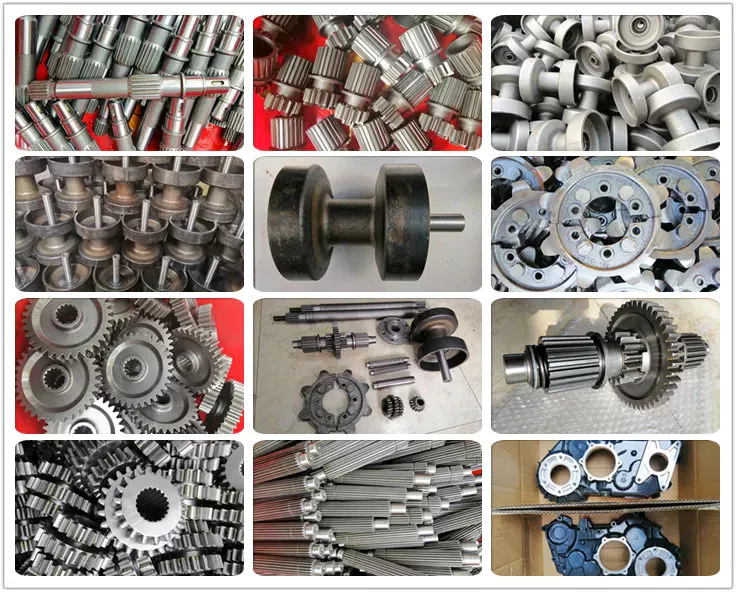
Disc brake mounting interfaces
A spline coupling for disc brake mounting interfaces is a type of hub-to-brake-disc mount. It is a highly durable coupling mechanism that reduces heat transfer from the disc to the axle hub. The mounting arrangement also isolates the axle hub from direct contact with the disc. It is also designed to minimize the amount of vehicle downtime and maintenance required to maintain proper alignment.
Disc brakes typically have substantial metal-to-metal contact with axle hub splines. The discs are held in place on the hub by intermediate inserts. This metal-to-metal contact also aids in the transfer of brake heat from the brake disc to the axle hub. Spline coupling for disc brake mounting interfaces comprises a mounting ring that is either a threaded or non-threaded spline.
During drag brake experiments, perforated friction blocks filled with various additive materials are introduced. The materials included include Cu-based powder metallurgy material, a composite material, and a Mn-Cu damping alloy. The filling material affects the braking interface’s wear behavior and friction-induced vibration characteristics. Different filling materials produce different types of wear debris and have different wear evolutions. They also differ in their surface morphology.
Disc brake couplings are usually made of two different types. The plain and HD versions are interchangeable. The plain version is the simplest to install, while the HD version has multiple components. The two-piece couplings are often installed at the same time, but with different mounting interfaces. You should make sure to purchase the appropriate coupling for your vehicle. These interfaces are a vital component of your vehicle and must be installed correctly for proper operation.
Disc brakes use disc-to-hub elements that help locate the forces and displace them to the rim. These elements are typically made of stainless steel, which increases the cost of manufacturing the disc brake mounting interface. Despite their benefits, however, the high braking force loads they endure are hard on the materials. Moreover, excessive heat transferred to the intermediate elements can adversely affect the fatigue life and long-term strength of the brake system.


editor by CX 2023-06-09