
Product Description
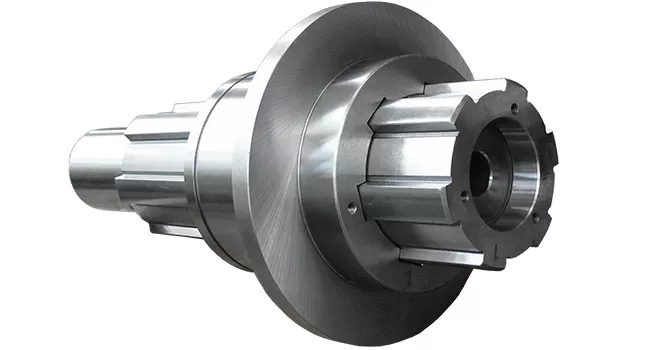
Densen customized precision steel forging gear driving spline shaft
We have professionals to solve your questions, please contact us directly!
| Description |
steel forging gear driving spline shaft |
| Process driving shaft | Open Die Forging Closed Die Forging Ring Forging |
| Material Grade | Steel;Carbon Steel;Alloy steel;Stainless steel; |
| Weight Range | 0.1kg-100kg |
| Standard | ANSI, ASTM, DIN, JIS, BS |
| Application driving shaft | Mine equipment,Petrochemical industry,Vessel,Diesel engine, Aircraft, Armament,Nuclear power,Thermal power,Hydroelectric etc. |
Products show:
Declaration:
Products shown herein are made to the requirements of specific customers and are illustrative of the types of manufacturing capabilities available within CHINAMFG group of companies.
Our policy is that none of these products will be sold to 3rd parties without written consent of the customers to whom the tooling, design and specifications belong.
Company Information
HangZhou New CHINAMFG Casting and Forging Company is the sales company of HangZhou CHINAMFG Group of Companies. Features of New CHINAMFG simply summarized as below:
1. Trusted supplier of steel, iron & non-ferrous components;
2. Extensive documented quality program in place.
3. Castings, forgings, stampings, machining, welding & fabrication services.
4. 9 related factories, over 50 joint-venture sub-contractors.
5. 25+ years of manufacturing experiences, 10+ years of exporting experience
6. 100% of products sold to overseas customers.
7. 50% of customer base is forturne 500 companies.
Processing support
Forging Service:
Forging is a manufacturing process involving the shaping of metal using localized compressive forces. New CHINAMFG offers open die forging, closed die forging and ring forging services. Material can be steel, iron and non-ferrous. Material can be handled include steel, iron, non-ferrous. Single component weight range is from 0.1Kg to 50,000Kgs.
Machining Service:
Machining is any of various processes in which a piece of raw material is cut into a desired final shape and size by a controlled material-removal process. New Densen-XBL has more than 60 sets precision machines incl. CNC center, boring, milling, lathing, etc., and more than 300 inspection instruments incl. 3 sets CMM with grade μm. Repeated tolerance can be maintained as 0.02mm. Meanwhile awarded by certificates ISO9001-2008; ISO/TS16949. New Densen-XBL specialized in high precise machining for small-middle-big metal components.
3rd Party Inspection:
New Densen worked as 3rd party inspection center besides its sister factories or sub-contractors’ self inspection, Offers process inspection, random inspection and before delivedry inspection services for material, mechanical, inside defects, dimentional, pressure, load, balance, surface treatment, visual inspection and test. Weekly project follow-up report together with pictures and videos, full quality inspection documentation available. New CHINAMFG also designed as 3rd party inspection representative for several customers when their products made by other suppliers.
Application:
Contact us
If you are looking for this kind of products right now , please do not hesitate to contact us by any of below methods:
/* January 22, 2571 19:08:37 */!function(){function s(e,r){var a,o={};try{e&&e.split(“,”).forEach(function(e,t){e&&(a=e.match(/(.*?):(.*)$/))&&1
| Processing Object: | Metal |
|---|---|
| Molding Style: | Forging |
| Molding Technics: | Pressure Casting |
| Application: | Agricultural Machinery Parts |
| Material: | SS, Carbon Steel |
| Heat Treatment: | Quenching |
| Customization: |
Available
| Customized Request |
|---|
What are the different types of spline profiles and their applications?
Spline profiles are used in various applications to transmit torque and motion between mating components. Here’s a detailed explanation of different spline profiles and their applications:
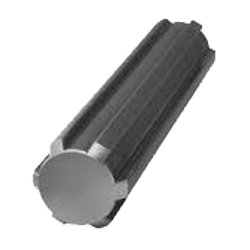
1. Involute Splines:
Involute splines have a trapezoidal tooth profile that allows for smooth engagement and disengagement. They are widely used in power transmission applications, such as automotive gearboxes, where high torque transmission is required. Involute splines provide excellent load distribution and can accommodate misalignment.
2. Straight Sided Splines:
Straight sided splines have straight-sided teeth that provide efficient torque transmission and high torsional stiffness. They are commonly used in applications where precise positioning is required, such as machine tools, robotics, and aerospace systems. Straight sided splines offer accurate motion control and are resistant to misalignment.
3. Serrations:
Serrations are a type of spline profile with multiple teeth in the form of parallel ridges and grooves. They are often used in applications that involve axial or linear motion, such as indexing mechanisms, clamping systems, or power tools. Serrations provide secure locking and positioning capabilities.
4. Helical Splines:
Helical splines have teeth that are helically shaped, similar to helical gears. They offer smooth and gradual tooth engagement, resulting in reduced noise and vibration. Helical splines are commonly used in applications that require high torque transmission and where quiet operation is critical, such as heavy machinery, industrial equipment, and automotive drivetrains.
5. Crowned Splines:
Crowned splines have a modified tooth profile with a slight curvature along the tooth length. This design helps distribute the load evenly across the tooth surfaces, reducing stress concentrations and improving load-carrying capacity. Crowned splines are used in applications where high load capacity and resistance to wear are essential, such as heavy-duty gearboxes, marine propulsion systems, or mining equipment.
6. Ball Splines:
Ball splines incorporate recirculating ball bearings within the spline nut and grooves on the shaft. This design enables linear motion with low friction and high precision. Ball splines are commonly used in applications that require smooth linear motion, such as CNC machines, robotics, or linear actuators.
7. Custom Splines:
In addition to the standard spline profiles mentioned above, custom spline profiles can be designed for specific applications based on unique requirements. Custom splines can be tailored to optimize torque transmission, load distribution, misalignment compensation, or other specific performance parameters.
The choice of spline profile depends on factors such as the magnitude of torque, required accuracy, misalignment tolerance, noise and vibration considerations, and environmental conditions. Engineers and designers carefully select the appropriate spline profile to ensure optimal performance and reliability in the intended application.
Can spline shafts be used in automotive applications, and if so, how?
Yes, spline shafts are extensively used in automotive applications due to their ability to transmit torque and provide reliable power transmission. Here’s how spline shafts are used in automotive applications:
Spline shafts play a crucial role in various automotive systems and components, including:
- Drivetrain: Spline shafts are an integral part of the drivetrain system in vehicles. They transmit torque from the engine to the wheels, allowing the vehicle to move. Spline shafts are present in components such as the transmission, differential, and axle shafts. In manual transmissions, the spline shaft connects the transmission input shaft to the clutch disc, enabling power transfer from the engine. In automatic transmissions, spline shafts are used in the torque converter and the output shaft.
- Steering System: Spline shafts are employed in the steering system to transmit torque from the steering wheel to the steering rack or gearbox. They provide a direct connection between the driver’s input and the movement of the wheels, allowing for steering control.
- Power Take-Off (PTO) Systems: Some vehicles, particularly commercial trucks and agricultural machinery, utilize PTO systems. Spline shafts are used in PTOs to transfer power from the vehicle’s engine to auxiliary equipment, such as hydraulic pumps, generators, or agricultural implements.
- Transfer Cases: In four-wheel-drive (4WD) or all-wheel-drive (AWD) vehicles, transfer cases are used to distribute power to the front and rear axles. Spline shafts are utilized in the transfer case to transfer torque between the transmission and the front and rear drive shafts.
- Propeller Shafts: Spline shafts are present in propeller shafts, which transmit torque from the transmission or transfer case to the rear axle in rear-wheel-drive vehicles. They accommodate the relative movement between the transmission and the axle due to suspension travel.
In automotive applications, spline shafts are designed to withstand high torque loads, provide precise torque transmission, and accommodate misalignments and fluctuations in operating conditions. They are typically made from high-strength steel or alloy materials to ensure durability and resistance to wear. Proper lubrication is essential to minimize friction and ensure smooth operation.
The use of spline shafts in automotive applications allows for efficient power transmission, precise control, and reliable performance, contributing to the overall functionality and drivability of vehicles.
In which industries are spline shafts typically used?
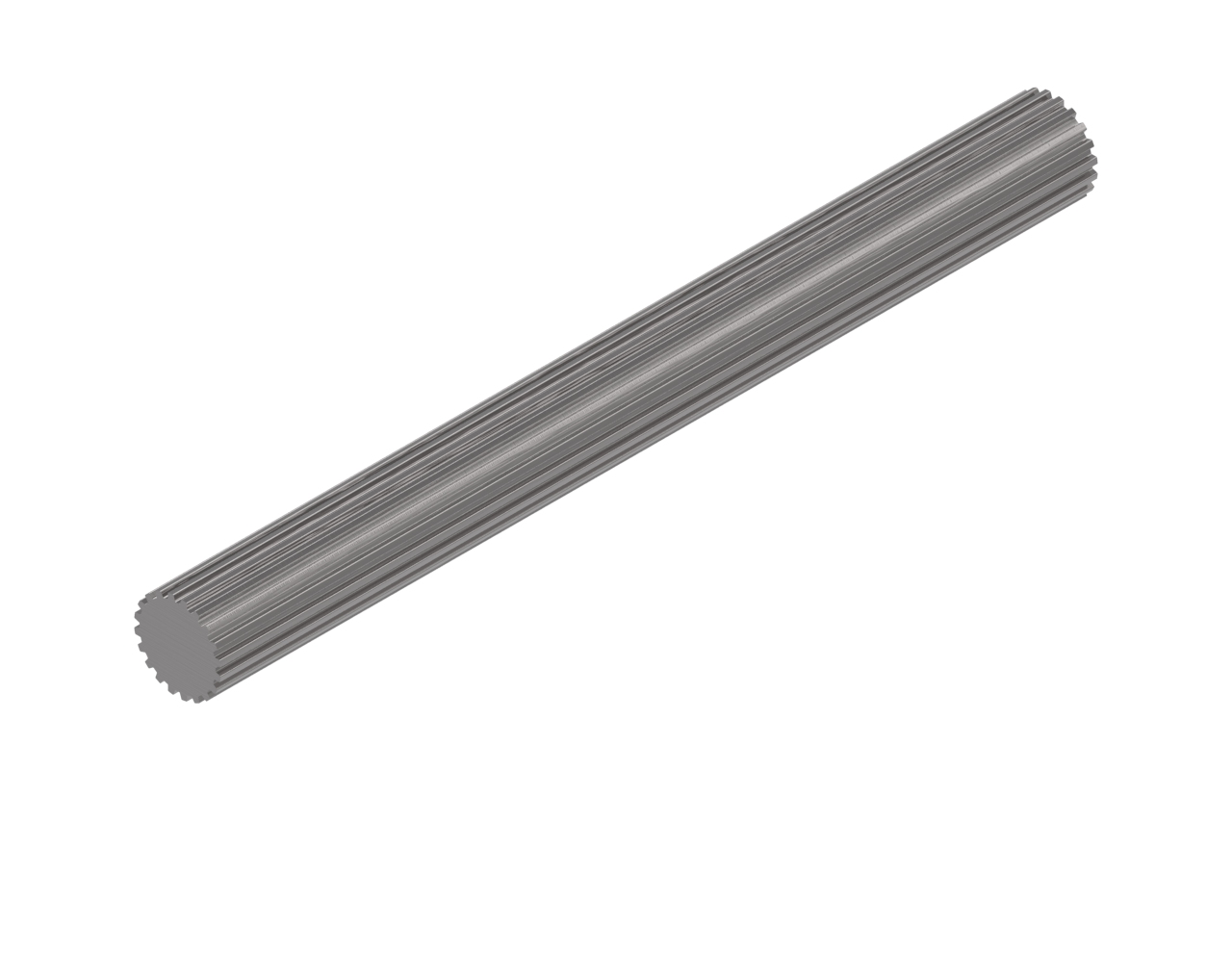
Spline shafts find applications in a wide range of industries where torque transmission, relative movement, and load distribution are critical. Here’s a detailed explanation:
1. Automotive Industry:
The automotive industry extensively uses spline shafts in various components and systems. They are found in transmissions, drivelines, steering systems, differentials, and axle assemblies. Spline shafts enable the transmission of torque, accommodate relative movement, and ensure efficient power transfer in vehicles.
2. Aerospace and Defense Industry:
Spline shafts are essential in the aerospace and defense industry. They are used in aircraft landing gear systems, actuation mechanisms, missile guidance systems, engine components, and rotor assemblies. The aerospace and defense sector relies on spline shafts for precise torque transfer, relative movement accommodation, and critical control mechanisms.
3. Industrial Machinery and Equipment:
Spline shafts are widely employed in industrial machinery and equipment. They are used in gearboxes, machine tools, pumps, compressors, conveyors, printing machinery, and packaging equipment. Spline shafts enable torque transmission, accommodate misalignments and vibrations, and ensure accurate movement and synchronization of machine components.
4. Agriculture and Farming:
The agriculture and farming industry extensively uses spline shafts in equipment such as tractors, harvesters, and agricultural implements. Spline shafts are found in power take-off (PTO) units, transmission systems, hydraulic mechanisms, and steering systems. They enable torque transfer, accommodate relative movement, and provide flexibility in agricultural machinery.
5. Construction and Mining:
In the construction and mining industries, spline shafts are used in equipment such as excavators, loaders, bulldozers, and drilling rigs. They are found in hydraulic systems, power transmission systems, and articulated mechanisms. Spline shafts facilitate torque transmission, accommodate misalignments, and enable efficient power transfer in heavy-duty machinery.
6. Marine and Offshore:
Spline shafts have applications in the marine and offshore industry. They are used in propulsion systems, thrusters, rudders, winches, and marine pumps. Spline shafts enable torque transmission in marine vessels and offshore equipment, accommodating axial and radial movement, and ensuring reliable power transfer.
7. Energy and Power Generation:
Spline shafts are utilized in the energy and power generation sector. They are found in turbines, generators, compressors, and other rotating equipment. Spline shafts enable torque transmission and accommodate relative movement in power generation systems, ensuring efficient and reliable operation.
8. Rail and Transportation:
Spline shafts are employed in the rail and transportation industry. They are found in locomotives, railcar systems, and suspension mechanisms. Spline shafts enable torque transfer, accommodate movement and vibrations, and ensure precise control in rail and transportation applications.
These are just a few examples of the industries where spline shafts are typically used. Their versatility, torque transmission capabilities, and ability to accommodate relative movement make them vital components in various sectors that rely on efficient power transfer, flexibility, and precise control.


editor by CX 2024-04-17