
Product Description
Precision Rectangular spline shaft involute spline shaft helical shaft rotary tiller accessories drive shaft
| Item | Customized machined machining gears |
| Process | CNC machining,CNC milling, cnc lathe machining |
| material | steel, stainless steel, carbon steel,brass,C360 brass copper, aluminum 7075,7068 brass,C360 brass copper, aluminum Nylon, PA66, NYLON , ABS, PP,PC,PE,POM,PVC,PU,TPR,TPE,TPU,PA,PET,HDPE,PMMA etc |
| Quality Control | ISO9001 and ISO14001 |
| Dimension bore tolerances | -/+0.01mm |
| Quality standard | AGMA, JIS, DIN |
| Surface treatment | Blackening, plated, anodizing, hard anodizing etc |
| Gear hardness | 30 to 60 H.R.C |
| Size/Color | Gears and parts dimensions are according to drawings from customer, and colors are customized |
| Surface treatment | Polished or matte surface, painting, texture, vacuum aluminizing and can be stamped with logo etc. |
| Dimensions Tolerance | ±0.01mm or more precise |
| Samples confirmation and approval | samples shipped for confirmation and shipping cost paid by customers |
| Package | Inner clear plastic bag/outside carton/wooden pallets/ or any other special package as per customer’s requirements. |
| Delivery Time | Total takes 2~~8weeks usually |
| Shipping | Usual FEDEX, UPS, DHL, TNT, EMS or base on customer’s requirement. |
FAQ
1.Q:Are there any special capabilities that your company has that we cannot see from the website?
A:We have passed the certification of ISO9001:2008 and TS16949 , our production and quality is ensured strictly of this
certifications . For any high quality products , we can do the PPAP and Control Plan as per customer’s request .
We have our own CMM , we can inspect precision dimensions that the normal calipers can’t measure , and ensure the quality .
2.Q:What are the maximum sizes and weights that you can produce: forging, casting & machining?
A:The maximum size for stainless steel parts could be 700*700*700mm , and the weight could be 200kg . The maximum size for carbon steel parts could be 1000*1000*1000mm, and the weight could be 350kg .And we could also produce CZPT parts at our cooperation company . The material is gray iron and ductile iron . For gray iron , the material grade could be HT150, HT200, HT250, HT300, HT350 . For ductile iron , the material grade could be QT400, QT450, QT500 , QT600 . The maximum size for CZPT could be Φ1500*2000mm , and the weight could be 4000kg . For the above size and weight is the maximum we could do , and for the smaller parts we could also produce .
3. Q:What are all the types of materials you can supply for forgings and for castings ?
A:Material Available: For casting , the material could be stainless steel , carbon steel , alloy steel . For forging , the
material could be stainless steel , carbon steel , alloy steel , aluminium , brass .
4. Q:What kind of payment conditions do you accept ?
A:For samples , we need 100% sample fee to be paid before start making samples . Or if there is mold , we need 50%
mold cost prepaid , the balance 50% mold cost to be paid before shipment . We will send you Inspection Reports and
photos of samples for you to approve before shipment .
For mass production , 30% T/T down payment before production , balance 70% against B/L copy .
5. Q:How long does it take to quote ?
A:Usually we can quote out in 2 days after we receive RFQ with all the necessary details . But if there are more
than 10 types need to quote , we will need about a week to quote .
6. Q:Do you provide modification service by CAD or 3D drawings from sample ?
A:Yes , we provide modification services if you want to change the design .
7. Q:I don’t have any drawing , can I send you a sample ?
A:Yes , we can create drawings per the original samples offered by our customers .
8. Q:What formats of drawings can you open ?
A:PDF , CAD , JPEG , JPG , or 3D files such as IGS , STEP , Solid-works .
9. Q:How do i ensure that my data is protected and secured ?
A:Usually , we show our machining work by displaying pictures of parts in the website , but we promise not to sell to
others . If customer don’t like to show their products on our website , we will promise his require .
10. Q:Why choose China HangZhou CZPT Automation Technology Co., Ltd ? Any advantages ?
A:The answer is Yes . There are 5 advantages :
(1) Mutual Win : Our offer will be reasonable , our price will be cheaper in the same quality .
(2) Customize: We can make the products as your request , shape and quality can meet your request.
(3) OEM : Laser print your logo ; Design your packing box .
(4) Mix Order : We accept mix order , different model and small quantity order .
(5) After Service : Can reback the off-test product or ask back the payment when get the off-test goods and judged
off-test by the third testing party .
|
Shipping Cost:
Estimated freight per unit. |
To be negotiated |
|---|
| Type: | Transmission |
|---|---|
| Usage: | Agricultural Products Processing, Farmland Infrastructure, Tillage, Harvester, Planting and Fertilization, Grain Threshing, Cleaning and Drying |
| Material: | Carbon Steel |
| Samples: |
US$ 20/Piece
1 Piece(Min.Order) | Order Sample Free sample with freight collected
|
|---|
| Customization: |
Available
| Customized Request |
|---|
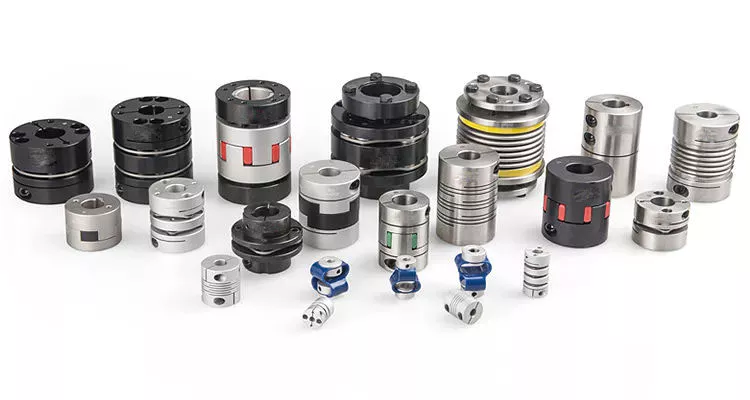
Stiffness and Torsional Vibration of Spline-Couplings
In this paper, we describe some basic characteristics of spline-coupling and examine its torsional vibration behavior. We also explore the effect of spline misalignment on rotor-spline coupling. These results will assist in the design of improved spline-coupling systems for various applications. The results are presented in Table 1.
Stiffness of spline-coupling
The stiffness of a spline-coupling is a function of the meshing force between the splines in a rotor-spline coupling system and the static vibration displacement. The meshing force depends on the coupling parameters such as the transmitting torque and the spline thickness. It increases nonlinearly with the spline thickness.
A simplified spline-coupling model can be used to evaluate the load distribution of splines under vibration and transient loads. The axle spline sleeve is displaced a z-direction and a resistance moment T is applied to the outer face of the sleeve. This simple model can satisfy a wide range of engineering requirements but may suffer from complex loading conditions. Its asymmetric clearance may affect its engagement behavior and stress distribution patterns.
The results of the simulations show that the maximum vibration acceleration in both Figures 10 and 22 was 3.03 g/s. This results indicate that a misalignment in the circumferential direction increases the instantaneous impact. Asymmetry in the coupling geometry is also found in the meshing. The right-side spline’s teeth mesh tightly while those on the left side are misaligned.
Considering the spline-coupling geometry, a semi-analytical model is used to compute stiffness. This model is a simplified form of a classical spline-coupling model, with submatrices defining the shape and stiffness of the joint. As the design clearance is a known value, the stiffness of a spline-coupling system can be analyzed using the same formula.
The results of the simulations also show that the spline-coupling system can be modeled using MASTA, a high-level commercial CAE tool for transmission analysis. In this case, the spline segments were modeled as a series of spline segments with variable stiffness, which was calculated based on the initial gap between spline teeth. Then, the spline segments were modelled as a series of splines of increasing stiffness, accounting for different manufacturing variations. The resulting analysis of the spline-coupling geometry is compared to those of the finite-element approach.
Despite the high stiffness of a spline-coupling system, the contact status of the contact surfaces often changes. In addition, spline coupling affects the lateral vibration and deformation of the rotor. However, stiffness nonlinearity is not well studied in splined rotors because of the lack of a fully analytical model.
Characteristics of spline-coupling
The study of spline-coupling involves a number of design factors. These include weight, materials, and performance requirements. Weight is particularly important in the aeronautics field. Weight is often an issue for design engineers because materials have varying dimensional stability, weight, and durability. Additionally, space constraints and other configuration restrictions may require the use of spline-couplings in certain applications.
The main parameters to consider for any spline-coupling design are the maximum principal stress, the maldistribution factor, and the maximum tooth-bearing stress. The magnitude of each of these parameters must be smaller than or equal to the external spline diameter, in order to provide stability. The outer diameter of the spline must be at least four inches larger than the inner diameter of the spline.
Once the physical design is validated, the spline coupling knowledge base is created. This model is pre-programmed and stores the design parameter signals, including performance and manufacturing constraints. It then compares the parameter values to the design rule signals, and constructs a geometric representation of the spline coupling. A visual model is created from the input signals, and can be manipulated by changing different parameters and specifications.
The stiffness of a spline joint is another important parameter for determining the spline-coupling stiffness. The stiffness distribution of the spline joint affects the rotor’s lateral vibration and deformation. A finite element method is a useful technique for obtaining lateral stiffness of spline joints. This method involves many mesh refinements and requires a high computational cost.
The diameter of the spline-coupling must be large enough to transmit the torque. A spline with a larger diameter may have greater torque-transmitting capacity because it has a smaller circumference. However, the larger diameter of a spline is thinner than the shaft, and the latter may be more suitable if the torque is spread over a greater number of teeth.
Spline-couplings are classified according to their tooth profile along the axial and radial directions. The radial and axial tooth profiles affect the component’s behavior and wear damage. Splines with a crowned tooth profile are prone to angular misalignment. Typically, these spline-couplings are oversized to ensure durability and safety.
Stiffness of spline-coupling in torsional vibration analysis
This article presents a general framework for the study of torsional vibration caused by the stiffness of spline-couplings in aero-engines. It is based on a previous study on spline-couplings. It is characterized by the following three factors: bending stiffness, total flexibility, and tangential stiffness. The first criterion is the equivalent diameter of external and internal splines. Both the spline-coupling stiffness and the displacement of splines are evaluated by using the derivative of the total flexibility.
The stiffness of a spline joint can vary based on the distribution of load along the spline. Variables affecting the stiffness of spline joints include the torque level, tooth indexing errors, and misalignment. To explore the effects of these variables, an analytical formula is developed. The method is applicable for various kinds of spline joints, such as splines with multiple components.
Despite the difficulty of calculating spline-coupling stiffness, it is possible to model the contact between the teeth of the shaft and the hub using an analytical approach. This approach helps in determining key magnitudes of coupling operation such as contact peak pressures, reaction moments, and angular momentum. This approach allows for accurate results for spline-couplings and is suitable for both torsional vibration and structural vibration analysis.
The stiffness of spline-coupling is commonly assumed to be rigid in dynamic models. However, various dynamic phenomena associated with spline joints must be captured in high-fidelity drivetrain models. To accomplish this, a general analytical stiffness formulation is proposed based on a semi-analytical spline load distribution model. The resulting stiffness matrix contains radial and tilting stiffness values as well as torsional stiffness. The analysis is further simplified with the blockwise inversion method.
It is essential to consider the torsional vibration of a power transmission system before selecting the coupling. An accurate analysis of torsional vibration is crucial for coupling safety. This article also discusses case studies of spline shaft wear and torsionally-induced failures. The discussion will conclude with the development of a robust and efficient method to simulate these problems in real-life scenarios.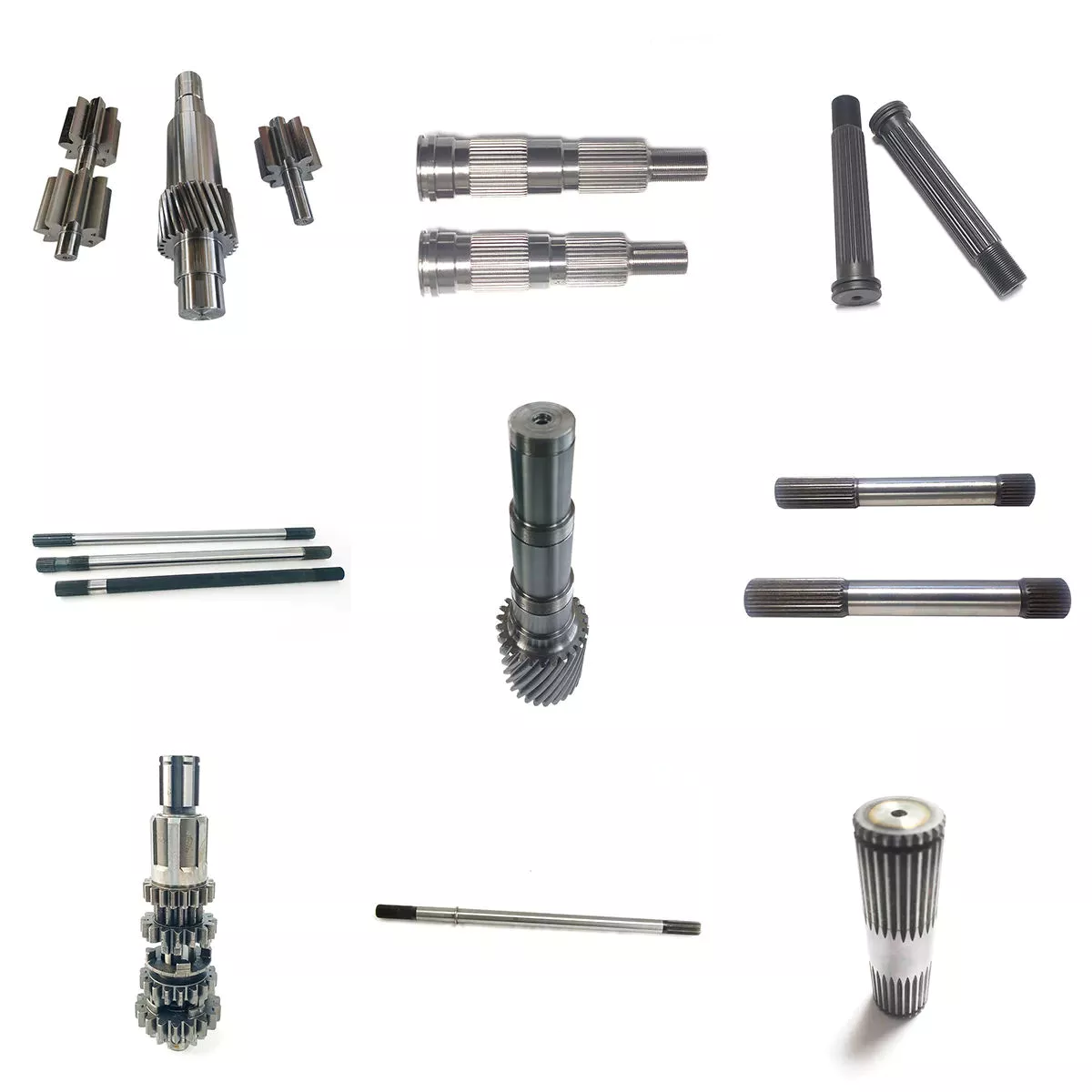
Effect of spline misalignment on rotor-spline coupling
In this study, the effect of spline misalignment in rotor-spline coupling is investigated. The stability boundary and mechanism of rotor instability are analyzed. We find that the meshing force of a misaligned spline coupling increases nonlinearly with spline thickness. The results demonstrate that the misalignment is responsible for the instability of the rotor-spline coupling system.
An intentional spline misalignment is introduced to achieve an interference fit and zero backlash condition. This leads to uneven load distribution among the spline teeth. A further spline misalignment of 50um can result in rotor-spline coupling failure. The maximum tensile root stress shifted to the left under this condition.
Positive spline misalignment increases the gear mesh misalignment. Conversely, negative spline misalignment has no effect. The right-handed spline misalignment is opposite to the helix hand. The high contact area is moved from the center to the left side. In both cases, gear mesh is misaligned due to deflection and tilting of the gear under load.
This variation of the tooth surface is measured as the change in clearance in the transverse plain. The radial and axial clearance values are the same, while the difference between the two is less. In addition to the frictional force, the axial clearance of the splines is the same, which increases the gear mesh misalignment. Hence, the same procedure can be used to determine the frictional force of a rotor-spline coupling.
Gear mesh misalignment influences spline-rotor coupling performance. This misalignment changes the distribution of the gear mesh and alters contact and bending stresses. Therefore, it is essential to understand the effects of misalignment in spline couplings. Using a simplified system of helical gear pair, Hong et al. examined the load distribution along the tooth interface of the spline. This misalignment caused the flank contact pattern to change. The misaligned teeth exhibited deflection under load and developed a tilting moment on the gear.
The effect of spline misalignment in rotor-spline couplings is minimized by using a mechanism that reduces backlash. The mechanism comprises cooperably splined male and female members. One member is formed by two coaxially aligned splined segments with end surfaces shaped to engage in sliding relationship. The connecting device applies axial loads to these segments, causing them to rotate relative to one another.


editor by CX 2023-04-24