
Product Description
OEM Forged/Machining Spline Pinion Shaft for Turned Wind Power Gearbox
Product Description
We have the completed machining equipment,including horizontal lathe,vertical lathe,CNC boring and milling machine,CNC boring machine,deep hole drilling and boring machine, gear hobbing machine,gear teeth grinding machine,grinding machine,etc.
Strictly quality inspection system can produce high quality productsFor each order,we can provide report for material chemical components testing,UT testing,hardness,mechanical property testing(impact testing,yield strength testing,tensile strength testing),size inspection,etc.
| Item | Shaft |
| Application | Cranes, Railway way, mineral Machinery, hydraulic Machinery, Spare parts etc. |
| Design | Can be at the customer’ request, tailor-made, at customer’s design |
| Material | Stainless Steel, Carbon Steel or Alloy Steel, such as 45#, 65# SAE4140, SAE4150, SAE4160, 42CrMo, stainless steel 410, stainless steel 304, or other required steel |
| Size | Diameter 10mm to 1000mm. Length max.in 6000mm |
Our Advantages
1. Advanced inspection equipment for rigorous quality and control and precise specification.
2. We are a direct manufacturer, have lots of experience for packing machine parts and medical parts.
3. Customizing inspection report, providing the material certification.
4. All sorts of drawing formats are available. For example: PRO/E, solid works, Ci-matron, Auto CAD and so on.
5. Young manage team with efficient productivity, quick response and modern business concept.
Manufacturing Process
*Free forged or module forged
*Rough machining process, to remove the surface forged oxidized black leather.
*100% Ultrasonic Test ASTMA388
*Heat Treatment according to request, Normalized, Quenched, Tempered….
*Hardness test
*Finishing Process to the dimensional state required by the drawing.
*100% Magnetic Test ASTM E709 and 100% dimensional test
*Painting or oil protecting
*Packing with boxes
| Advantages | »Reliable Forging/CNC Machining service »Good machining quality »Reasonable Pricing provided »Competitive shipping cost service »MOQ 1PCS and small quantity order accepted »Professional engineering service when any modification required »Any turnkey assembly or customized package requirements, we’ll meet your demands! |
|||||
| RFQ | Customer Inquiry →Engineering Communication →Cost Analysis →Sales Analysis → Quote to Customer » 1-3 Work Days Only » Submit RFQ with complete commercial terms |
|||||
| Sample Making | Sample Order → Engineering Review → Sample Plan to Customer → Sample Status Tracking → Submit Samples with Doc. » Tooling L/T: 2-4 weeks, Sample L/T: 1 week » Continuous Sample Status Tracking » Complete Documents for sample approval |
|||||
| Order Management | CRM System → Open Order Confirm → Logistic Arrangement. » Production L/T: 4-8 weeks » Weekly Open Order Confirm » Preferred 3PL Service to Customers |
|||||
| Quality Control | Certificates: RoHS, ISO9001:2008, SGS. IQC → IPQC → OQC/FQC → Quality Complain Feedback → Audit & Training. » Plant Audit and Qualified by world famous company » Strict Quality Management Procedure with Traceability |
|||||
| Application | »Aerospace »Marine »Motorbike »Automotive »PhotoGear »EDC Tools » lighting fittings »Medical equipment »Telecommunication »Electrical & Electronics »Fire detection system, etc. |
|||||
In order to ensure the quality of the orders,our independent QC members to carry out strict inspection at each
stage:
*Raw Material Quality Control: Chemical Composition Analysis, Mechanical Performance Test
*Production Process Quality Control: Full-size inspection for the 1st part, Critical size process inspection, SPC process monitoring
*Lab ability: CMM, OGP, XRF, Roughness meter, Profiler, Automatic optical inspector
*Quality system: ISO9001
FAQ
1) How can I place order?
A: You can contact us by email about your order details, or place order on line.
2) How can I pay you?
A: After you confirm our PI. we will request you to arrange payment by T/T.
3) What’s the order procedure?
A: First we discuss order details, production details by email or TM. Then we issue you an PI for your confirmation. You will be requested to do pre-paid full payment or 30% deposit before we go into production. After we get the deposit, we start to process the order. We usually need 4-8 weeks if we don’t have the items in stock. Before production has been finished, we will contact you for shipment details, start to prepare the shipment for you, and the balance payment should be settled before delivery.
4) How do you take care when your clients received defective products?
A: replacement. If there are some defective items, we usually credit to our customer or replace them in next shipment.
5) How do you check all the goods in the production line?
A: We have spot inspection and finished product inspection. We check the goods when they go into next step production procedure. And all the goods will be tested after welding, assure 100% no leaking problems.
Trade:
Your inquiry will be replied within 12 hours.
Well-trained & experienced sales can reply your inquiries in English.
During working time, E-mail will be replied to you within 2 hours
OEM & ODM projects are highly welcomed. We have strong R&D team.
The order will be produced exactly according to order details and proofed samples.
Our QC will submitinspection report before shipment.
Your business relationship with us will be confidential to any third party.
Good after-sale service.
If there’s anything we could help, please feel free to contact us.
/* January 22, 2571 19:08:37 */!function(){function s(e,r){var a,o={};try{e&&e.split(“,”).forEach(function(e,t){e&&(a=e.match(/(.*?):(.*)$/))&&1
| Material: | Carbon Steel |
|---|---|
| Load: | Drive Shaft |
| Stiffness & Flexibility: | Stiffness / Rigid Axle |
| Samples: |
US$ 1/Piece
1 Piece(Min.Order) | Order Sample customized according to requirements
|
|---|
| Customization: |
Available
| Customized Request |
|---|
.shipping-cost-tm .tm-status-off{background: none;padding:0;color: #1470cc}
|
Shipping Cost:
Estimated freight per unit. |
about shipping cost and estimated delivery time. |
|---|
| Payment Method: |
|
|---|---|
|
Initial Payment Full Payment |
| Currency: | US$ |
|---|
| Return&refunds: | You can apply for a refund up to 30 days after receipt of the products. |
|---|
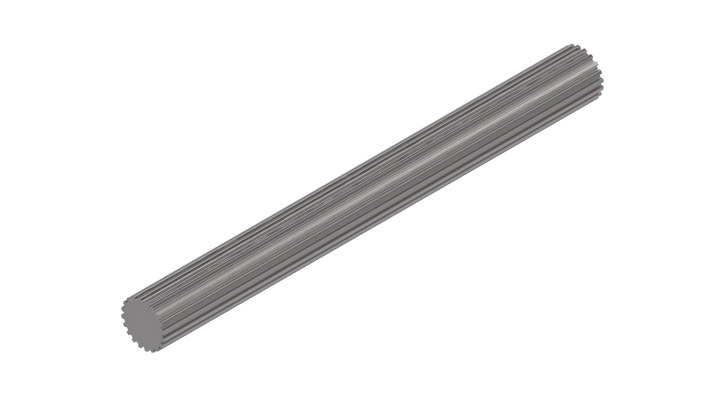
Can spline shafts be customized for specific machinery and equipment?
Yes, spline shafts can be customized to suit specific machinery and equipment requirements. Here’s a detailed explanation:
1. Size and Length:
Spline shafts can be customized in terms of size and length to fit the dimensions of the machinery or equipment. Manufacturers can design spline shafts with the appropriate diameter, overall length, and spline length to ensure a proper fit within the system.
2. Spline Profile:
The spline profile can be customized based on the specific application. Different spline profiles, such as involute, serrated, or helical, can be used to optimize torque transmission, load distribution, and engagement characteristics based on the requirements of the machinery or equipment.
3. Number of Splines:
The number of splines on the shaft can be customized to match the mating component. The number of splines determines the engagement area and affects the torque-carrying capacity of the spline shaft. By adjusting the number of splines, manufacturers can tailor the spline shaft to the specific torque and load requirements of the machinery or equipment.
4. Material Selection:
The choice of material for spline shafts can be customized based on the operating conditions and environmental factors of the machinery or equipment. Different materials, such as alloy steels or stainless steels, can be selected to provide the necessary strength, durability, corrosion resistance, or other specific properties required for the application.
5. Surface Treatment:
The surface of spline shafts can be customized with various treatments to enhance their performance. Surface treatments like heat treatment, coating, or plating can be applied to improve hardness, wear resistance, or corrosion resistance based on the specific requirements of the machinery or equipment.
6. Tolerances and Fit:
Tolerances and fit between the spline shaft and mating components can be customized to achieve the desired clearance or interference fit. This ensures proper engagement, smooth operation, and optimal performance of the machinery or equipment.
7. Special Features:
In certain cases, spline shafts can be customized with additional features to meet specific needs. This may include the incorporation of keyways, threads, or other specialized features required for the machinery or equipment.
Manufacturers and engineers work closely with the machinery or equipment designers to understand the specific requirements and tailor the spline shafts accordingly. By considering factors such as size, spline profile, number of splines, material selection, surface treatment, tolerances, fit, and any special features, customized spline shafts can be developed to ensure optimal performance and compatibility with the machinery or equipment.
It is important to consult with experienced spline shaft manufacturers or engineering professionals to determine the most suitable customization options for a particular machinery or equipment application.
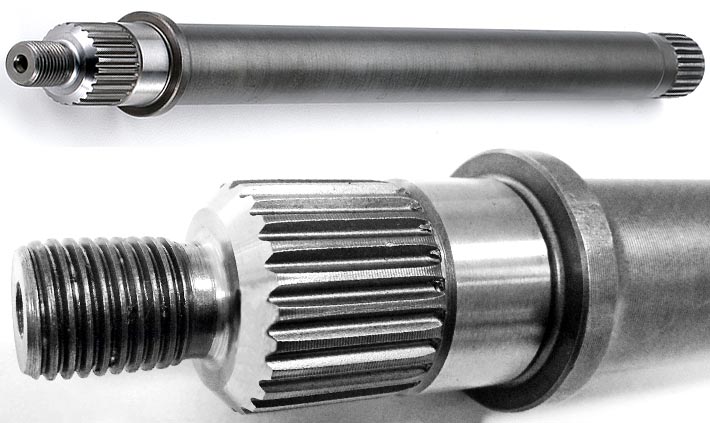
Can spline shafts be repaired or maintained when necessary?
Yes, spline shafts can be repaired and maintained when necessary to ensure their continued functionality and performance. Here are some ways spline shafts can be repaired and maintained:
1. Inspection and Assessment:
When an issue is suspected with a spline shaft, the first step is to conduct a thorough inspection. This involves examining the shaft for any signs of wear, damage, or misalignment. Special attention is given to the spline teeth, which may show signs of wear or deformation. Through inspection and assessment, the extent of the repair or maintenance required can be determined.
2. Spline Tooth Repair:
If the spline teeth are damaged or worn, they can be repaired or replaced. Repair methods may include re-machining the teeth to restore their original profile, filling and reshaping the worn areas using specialized welding techniques, or replacing the damaged section of the spline shaft. The specific repair method depends on the severity of the damage and the material of the spline shaft.
3. Lubrication and Cleaning:
Regular lubrication and cleaning are essential for maintaining spline shafts. Lubricants help reduce friction and wear between the mating surfaces, while cleaning removes contaminants that can affect the spline’s engagement. During maintenance, old lubricants are removed, and fresh lubricants are applied to ensure smooth operation and prevent premature failure.
4. Surface Treatment:
If the spline shaft undergoes wear or corrosion, surface treatment can be applied to restore its condition. This may involve applying coatings or treatments to enhance the hardness, wear resistance, or corrosion resistance of the spline shaft. Surface treatments can improve the longevity and performance of the spline shaft, reducing the need for frequent repairs.
5. Balancing and Alignment:
If a spline shaft is experiencing vibration or misalignment issues, it may require balancing or realignment. Balancing involves redistributing mass along the shaft to minimize vibrations, while alignment ensures proper mating and engagement with other components. Balancing and alignment procedures help optimize the performance and longevity of the spline shaft.
6. Replacement:
In cases where the spline shaft is severely damaged or worn beyond repair, replacement may be necessary. Replacement spline shafts can be sourced from manufacturers or specialized suppliers who can provide shafts that meet the required specifications and tolerances.
It’s important to note that the repair and maintenance of spline shafts should be carried out by qualified professionals with expertise in precision machining and mechanical systems. They have the knowledge and tools to properly assess, repair, or replace spline shafts, ensuring the integrity and functionality of the system in which they are used.
By implementing regular maintenance and timely repairs, spline shafts can be kept in optimal condition, extending their lifespan and maintaining their performance in various mechanical applications.
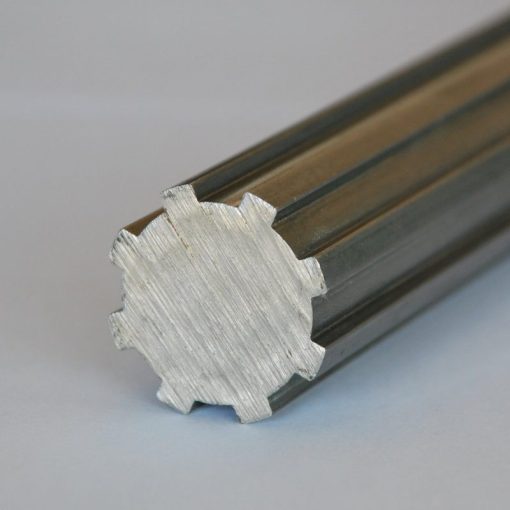
What is a spline shaft and what is its primary function?
A spline shaft is a mechanical component that consists of a series of ridges or teeth (called splines) that are machined onto the surface of the shaft. Its primary function is to transmit torque while allowing for the relative movement or sliding of mating components. Here’s a detailed explanation:
1. Structure and Design:
A spline shaft typically has a cylindrical shape with external or internal splines. The external spline shaft has splines on the outer surface, while the internal spline shaft has splines on the inner bore. The number, size, and shape of the splines can vary depending on the specific application and design requirements.
2. Torque Transmission:
The main function of a spline shaft is to transmit torque between two mating components, such as gears, couplings, or other rotational elements. The splines on the shaft engage with corresponding splines on the mating component, creating a mechanical interlock. When torque is applied to the spline shaft, the engagement between the splines ensures that the rotational force is transferred from the shaft to the mating component, allowing the system to transmit power.
3. Relative Movement:
Unlike other types of shafts, a spline shaft allows for relative movement or sliding between the shaft and the mating component. This sliding motion can be axial (along the shaft’s axis) or radial (perpendicular to the shaft’s axis). The splines provide a precise and controlled interface that allows for this movement while maintaining torque transmission. This feature is particularly useful in applications where axial or radial displacement or misalignment needs to be accommodated.
4. Load Distribution:
Another important function of a spline shaft is to distribute the applied load evenly along its length. The splines create multiple contact points between the shaft and the mating component, which helps to distribute the torque and axial or radial forces over a larger surface area. This load distribution minimizes stress concentrations and reduces the risk of premature wear or failure.
5. Versatility and Applications:
Spline shafts find applications in various industries and systems, including automotive, aerospace, machinery, and power transmission. They are commonly used in gearboxes, drive systems, power take-off units, steering systems, and many other rotational mechanisms where torque transmission, relative movement, and load distribution are essential.
6. Design Considerations:
When designing a spline shaft, factors such as the torque requirements, speed, applied loads, and environmental conditions need to be considered. The spline geometry, material selection, and surface finish are critical for ensuring proper engagement, load-bearing capacity, and durability of the spline shaft.
In summary, a spline shaft is a mechanical component with splines that allows for torque transmission while accommodating relative movement or sliding between mating components. Its primary function is to transmit rotational force, distribute loads, and enable axial or radial displacement in various applications requiring precise torque transfer and flexibility.


editor by CX 2024-05-07