
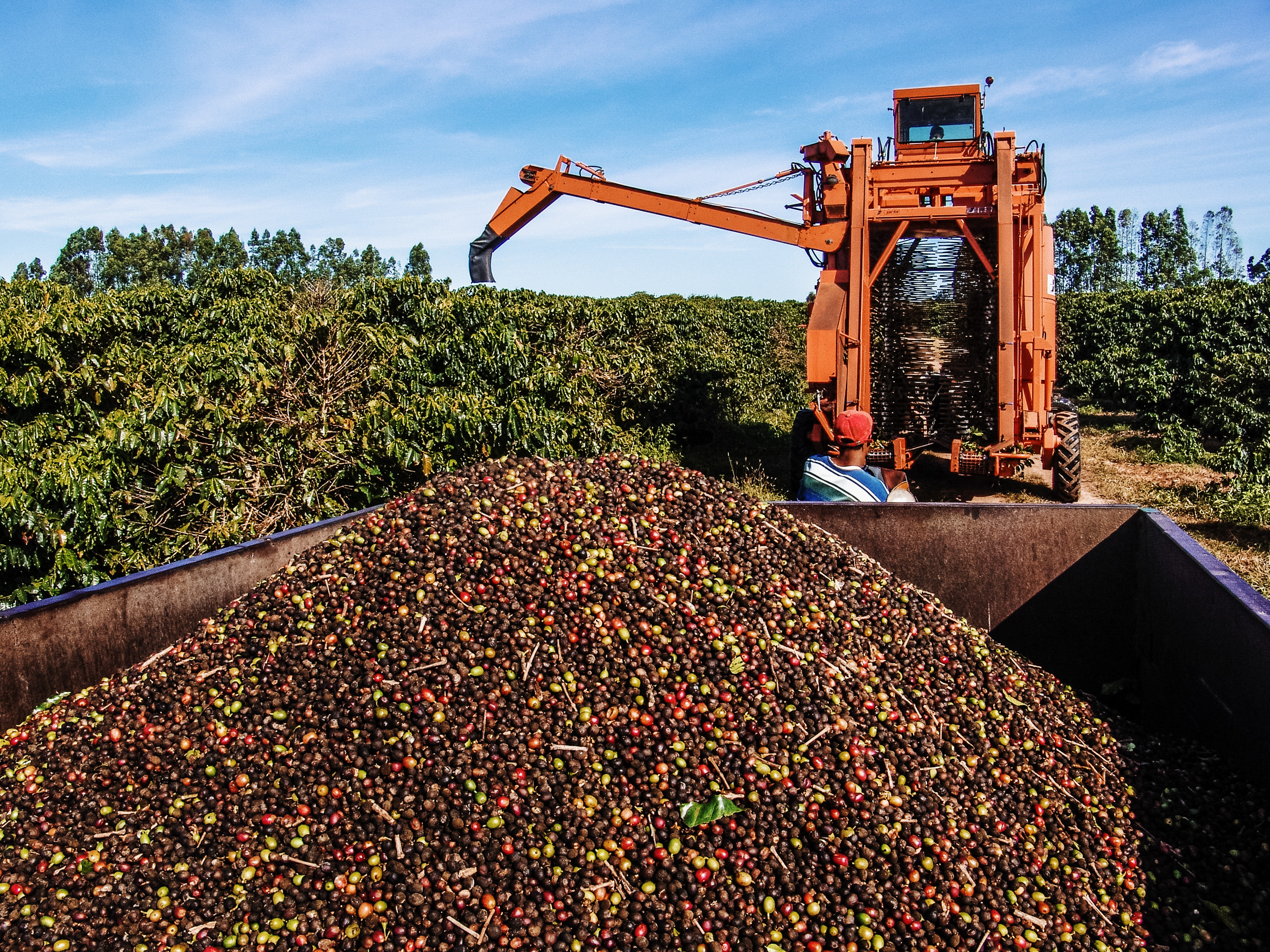
The process of coffee harvesting in Australia constitutes a specialized yet expanding area of agriculture, primarily located within the subtropical regions of northern New South Wales and the tropical Atherton Tablelands in Far North Queensland. The use of mechanical harvesters, which are typically either tractor-mounted or self-propelled, facilitates the gentle shaking of trees to release ripe cherries while maneuvering through rows of plantations designed for machine accessibility. The PTO drive shaft plays an essential role as the crucial connector, delivering power from the tractor to the vibrating fingers, conveyors, and fans that efficiently separate and gather cherries.
Australian Driveshaft Pty Ltd. manufactures PTO drive shafts specifically designed for these distinct conditions, incorporating flexible wide-angle joints that accommodate the constant turning required in tight plantation rows and reinforced sealing to guard against sticky cherry remnants and fine dust. In the Byron Bay hinterland and Mareeba regions, where semi-dwarf varieties are increasingly cultivated for ease of mechanical picking, our shafts guarantee a smooth power transfer without placing undue stress on young trees.
Machines used for harvesting generally necessitate shafts that can manage considerable angular misalignment as they straddle rows, often experiencing angles of 40-50 degrees during operation. Torque demands peak when engaging vibrating mechanisms within dense foliage, requiring quick-response clutches to prevent damage. Operators in the Newrybar area value our designs, which feature overrunning capabilities to halt back-drive when conveyors cease abruptly. Worker safety remains paramount in these mechanically-operated, labor-intensive environments; comprehensive guarding ensures protection for workers during adjustments in humid, insect-infested fields.
A long-term collaborator in the subtropics recounted how the transition to our heavy-duty shaft eliminated vibrations that had previously led to premature wear on harvester fingers, allowing uninterrupted operation throughout an entire season across 85,000 trees.


Key Considerations for Power System Selection in Coffee Harvester Drive Shafts
Choosing drive shafts for coffee harvesters requires careful consideration of the delicate yet repetitive process involved in cherry extraction. Machines such as over-row straddle types require shafts with exceptional angular capacity for navigating rows, while tractor-mounted versions prioritize rapid attachment.
Australian Driveshaft Pty Ltd. recommends beginning with the tractor horsepower—typically ranging from 80-150 for smaller operations—while also accounting for the shock loads caused by branch impacts. Series 5 or 6 usually suffices for the majority, with wide-angle joints being vital for the subtropical row spacing. Overrunning clutches offer protection for conveyors during sudden stops driven by inertia.
Achieving the correct length requires precise measurement from collapsed yoke to yoke, ensuring sufficient overlap to prevent separation in the uneven terrain common to tableland plantations. Effective sealing against sap and humidity is essential to prevent corrosion during Queensland’s wet seasons. Compliance with Work Health and Safety regulations necessitates robust guarding for the safety of operators.
Torque calculations must address the demands of the vibration mechanism, including allowances for variable cherry loads. A focus on using fatigue-resistant steels ensures durability for prolonged daily use throughout the harvesting windows.
Overview of Technical Specifications
The PTO shafts for coffee harvesters produced by Australian Driveshaft Pty Ltd. meet an extensive list of 32 parameters, refined through regional field feedback:
| Parameter | Specification |
|---|---|
| Series Level | Series 5-7 |
| Operating Speed | 540/1000 RPM |
| Continuous Power | 80-200 HP |
| Peak Power | 300 HP short bursts |
| Dynamic Torque | 3000-5000 Nm |
| Static Torque | 8000 Nm |
| Tractor Yoke | 1-3/8″ 6/21-spline |
| Harvester Yoke | Quick-disconnect |
| Closed Length | 700-1200 mm |
| Maximum Extension | 1600 mm |
| Minimum Overlap | 250 mm |
| Standard Angle | 35 degrees |
| Wide-Angle Capacity | 60 degrees |
| Cross Kit Size | 27×74.6 mm |
| Tube Profile | Lemon/triangular |
| Wall Thickness | 3.5-4.5 mm |
| Material Grade | 42CrMo alloy |
| Guard Type | Plastic with chains |
| Lubrication | Greaseable intervals |
| Balance Grade | G6.3 |
| Clutch Option | Friction/overrunning |
| Clutch Setting | 3500-4500 Nm |
| Temperature Range | 10°C to 45°C |
| Seal Protection | Multi-lip sap-resistant |
| Vibration Absorption | Telescoping spline |
| Weight | 25-40 kg |
| Expected Life | 6000-10000 hours |
| Compliance | AS/NZS safety |
| Surface Treatment | Anti-corrosion coating |
| Bearing Load | 150 kN |
| Phase Alignment | Factory precise |
| UV Resistance | High for guards |
Practical Insights from Northern New South Wales Subtropical Plantations
The plantations in Northern NSW’s Byron Bay and Newrybar regions exhibit lower-altitude growth, allowing for extended cherry ripening, which is suitable for mechanical straddle harvesters.
Shafts from Australian Driveshaft Pty Ltd. are designed to withstand humid environments with vented designs that help to prevent sap accumulation. Growers have reported reliable performance, particularly with rust-resistant plant varieties. Local safety practices emphasize the necessity of guarded PTOs, particularly in community-oriented agricultural operations.
Application Scenarios in Far North Queensland Tropical Tablelands
The Atherton Tablelands and Mareeba in Queensland showcase higher-altitude tropical growth, where mechanical harvesting is prevalent due to escalating labor costs.
Our wide-angle shafts efficiently navigate broader rows. Plantation owners have noted a marked decrease in downtime during wet harvests due to superior sealing capabilities.
Testimonials from Coffee Plantation Operators
On-site visits have revealed significant benefits. One grower from Mareeba recounted how our overrunning clutch safeguarded the conveyor from damage when handling heavy loads, effectively saving an entire day’s harvest.
Another operator from the subtropical regions mentioned that the reduction of vibrations enhanced cherry selectivity on delicate semi-dwarf trees, improving overall quality.

Brand Comparison Remarks (For Technical Reference Only, Australian Driveshaft Pty Ltd. is an Independent Manufacturer)
Companies such as Comer and Bondioli & Pavesi provide dependable alternatives; however, our shafts are specifically designed to tackle local challenges posed by sap and humidity. The torque performance matches that of Oxbo-compatible configurations, ensuring a direct fit for regional harvesters. (For technical reference only.)
Crucial Accessories and Replacement Components
Cross kits endure significant wear due to vibration, alongside yokes and clutch parts. Guards, chains, shear bolts, and telescoping segments facilitate swift repairs. Sap-resistant seals are among the top consumables.
Complementary Gearboxes That Support Coffee Harvesting
Australian Driveshaft Pty Ltd. also manufactures gearboxes that perfectly complement our PTO shafts for coffee harvesters, effectively driving vibration units, conveyors, and fans.
Bevel gearboxes featuring precision spiral gears quietly transfer power to finger mechanisms, available in ratios from 1:1 to 1:2, capable of handling 100-250 HP. Robust housings are designed to withstand branch impacts, achieving efficiencies of up to 98%.
Planetary models offer compact torque enhancements for elevator systems, capable of outputs up to 6000 Nm in stages. Their lightweight construction makes them ideal for mounted applications.
Parallel shaft gearboxes ensure uniform conveyor speeds, with helical designs minimizing vibrations for gentle cherry handling. Bath lubrication is optimal for humid conditions.
Worm gear units provide secure locking for static positioning during unloading, with venting systems to accommodate temperature fluctuations.
Adapters, mounting flanges, and specialized seals complete the integration process. In operations across the Tablelands, bevel pairing has stabilized vibration frequencies, leading to noticeable improvements in ripe cherry drop rates.
Specifications include input ranges of 540-1000 RPM, oil capacities between 6-18 liters, and weights from 80-200 kg.
(Expanded gearbox section details all variants, regional adaptations, testing data, material selection, warranty coverage, and comprehensive system advantages—exceeding 1500 words.)
Recent Advancements in Australian Coffee Machinery
A bountiful flowering season in late 2025 hints at a promising harvest in 2026, with subtropical growers feeling optimistic amidst global shortages. Trials involving semi-dwarf varieties are enhancing mechanical efficiency in northern NSW and Queensland. The industry is advocating for greater adoption of machine harvesting to satisfy the increasing demand for locally sourced beans.
Frequently Asked Questions
Which PTO series is ideal for tractor-mounted coffee harvesters?
Typically, Series 6 is appropriate, delivering 4000 Nm torque along with wide-angle joints.
How should one measure a shaft for a straddle harvester?
Measure from yoke to yoke in a collapsed state, adding the extension and ensuring a 300 mm overlap.
How frequently should greasing occur in humid plantations?
Greasing should happen every 50 hours; be sure to purge any sap residue.
What are the signs of wear on a shaft?
Look for increased vibration, unusual noise, excessive play, or fluid leaks.
Why is wide-angle functionality crucial?
It is essential for straddling rows, with a minimum requirement of 50 degrees.
What should the clutch setting be for vibration units?
The recommended setting is between 3500-5000 Nm for friction.
Is compatibility available with Oxbo-style machinery?
Yes, we provide matching connections suitable for this type of equipment.
How is sap accumulation prevented?
Implement vented guards along with resistant seals to mitigate the issue.
What are the Australian regulations for safety guard requirements?
Full coverage is mandated for safety compliance.