
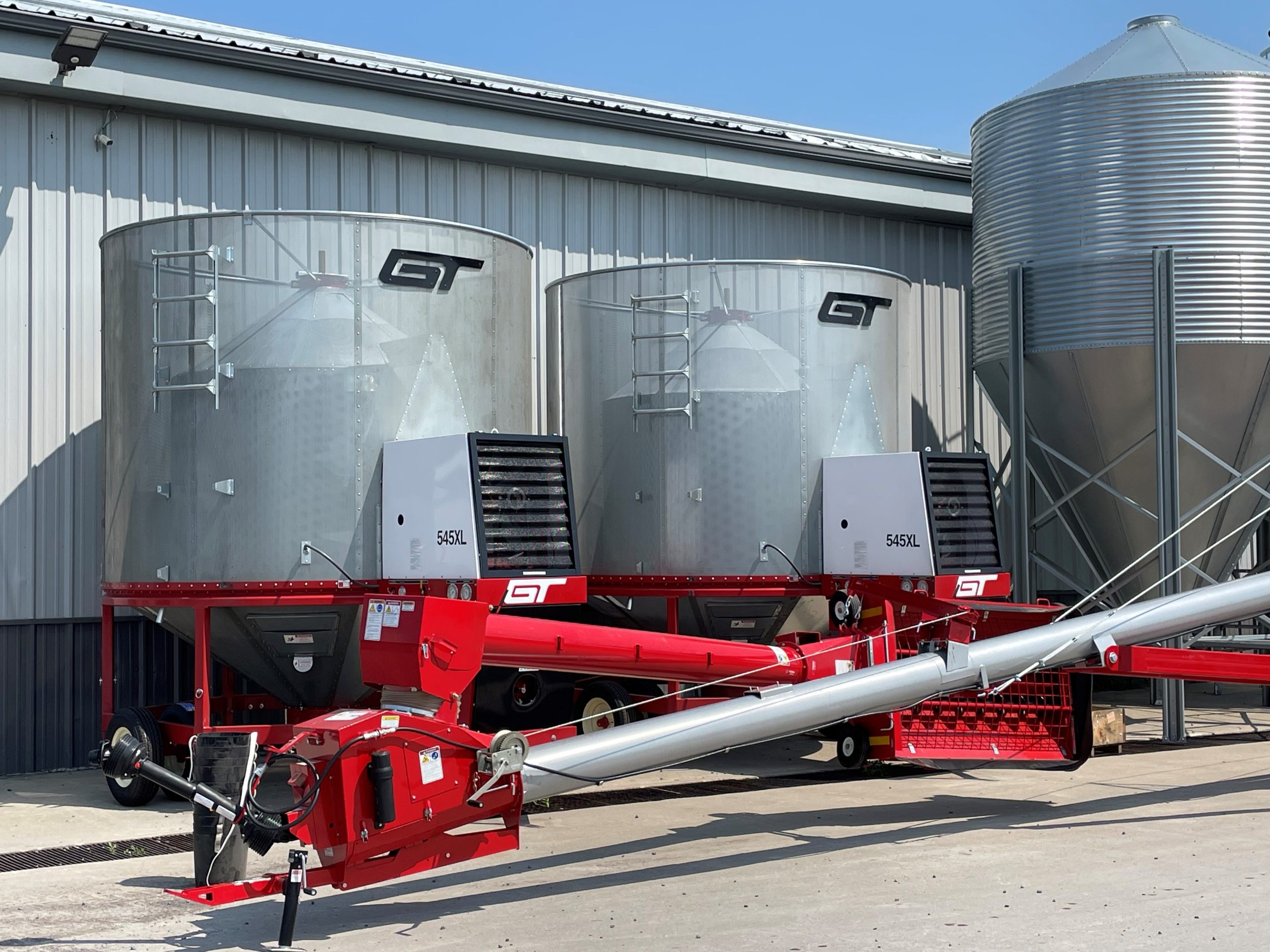
Australian Driveshaft Pty Ltd specializes in providing reliable PTO driveshafts designed to operate grain dryers across Australia’s expansive agricultural regions. These essential components connect tractor outputs to augers, fans, and mixing systems in both batch and continuous-flow drying processes, ensuring steady loads while enduring the dust and humidity typical in post-harvest grain storage. From the wheat-producing areas of Western Australia to the sorghum fields in Queensland, our driveshafts facilitate dependable operations during crucial drying periods when adverse weather conditions threaten grain quality.
Efficient grain drying safeguards financial value by lowering moisture content to acceptable storage levels—typically around 12-14% for wheat and 13-15% for corn—thereby preventing spoilage and the growth of aflatoxins in humid environments. PTO-driven dryers are prevalent in both mobile and smaller stationary configurations, driving unload augers at rates of 200-400 tonnes per hour or circulation fans that can move air volumes exceeding 50,000 cubic metres per hour. Our driveshafts are engineered to accommodate misalignment, a common occurrence when trailers are positioned next to silos or when dryers are elevated for loading, with angles potentially reaching up to 20 degrees during setup.
Power demands vary depending on capacity. Smaller batch dryers suitable for on-farm application operate effectively with tractors ranging from 50 to 100 HP at 540 RPM, whereas larger continuous-flow models require 150 HP or more for multiple drives. Telescoping designs ensure overlap for safe extension, which is critical when navigating the tight shed layouts often found in mixed farms across New South Wales.
The robust construction of our driveshafts is designed to withstand the abrasive impacts of grain dust and chaff. Reinforced joints are built to resist wear from constant low-speed operations, while improved sealing mechanisms prevent contamination that can drastically reduce lifespan in barley or canola applications.
Safety features include comprehensive guarding that meets Australian safety standards, incorporating restraint chains and shear protection to guard against blockages in wet grain flows.

A grain producer in Western Australia upgraded to our series 5 driveshaft following dust-related failures that disrupted operations mid-harvest. The enhanced seals and balanced design allowed for uninterrupted processing of 500 tonnes throughout a demanding season.
In South Australia’s Mallee region, similar modifications enhance the efficiency of high-volume wheat drying.
These instances demonstrate how durable transmission systems preserve grain quality and contribute to farm profitability.
Key Technical Specifications for Grain Dryer Driveshafts
Australian Driveshaft Pty Ltd engineers driveshafts tailored to the needs of grain dryers, leveraging insights from operations in Australia, North America, Europe, and Asia, where consistent drying is critical to maintaining market standards.
- Series Options: Series 3-6 are standard; Series 4 is suitable for most PTO applications.
- Continuous Torque (540 RPM): 800-2000 Nm.
- Peak Torque Rating: Up to 3500 Nm for starting augers.
- Operating Angle Range: 15-30 degrees.
- Telescoping Length: Adjusts from 250-450 mm.
- Tractor Spline Standard: 1-3/8″ 6 or 21-spline.
- Implement Yoke Type: Quick-disconnect preferred.
- Tube Geometry: Lemon or triangular shapes.
- Cross Kit Diameter: Ranges from 24-30 mm.
- Material Grade: High-tensile alloy steel.
- Heat Treatment: Quenched and tempered.
- Surface Protection: Combination of zinc and polymer coating.
- Guard Design: Made from impact-resistant plastic.
- Chain Restraints: Standard inclusion.
- Overrunning Clutch: Available for fan inertia management.
- Torque Limiter: Options for shear bolt or friction-based.
- Weight Approximate: Ranges from 18-40 kg.
- Balance Specification: Minimum G6.3.
- Speed Limit: 1000 RPM.
- Temperature Tolerance: -10°C to 70°C.
- Grease Requirement: Every 50 hours.
- Service Life Target: 5000-8000 hours.
- Dust Resistance: Multi-lip seals featured.
- Compliance Standards: Adheres to AS/NZS machinery safety regulations.
- HP Capacity (540 RPM): Ranges from 60-180 continuous.
- Vibration Control: Achieved through precision phasing.
- Minimum Overlap: 200 mm required.
- Yoke Strength: Constructed from forged materials.
- Weld Integrity: Maintained through automated processes.
- Testing Procedure: Full load cycle evaluations.
- Spline Protection: Caps are included.
- Length Customization: Cut-to-fit options available.
- Auger Compatibility: Direct drive configurations.
These specifications ensure consistent performance in challenging drying environments.
| Parameter | Series 3 | Series 4 | Series 5 | Series 6 |
|---|---|---|---|---|
| Torque (Nm) @540 RPM | 1000 | 1400 | 1800 | 2500 |
| HP Rating | 70-100 | 100-140 | 140-180 | 180-250 |
| Cross Size (mm) | 24 | 27 | 30 | 35 |
| Typical Closed Length (m) | 1.0-1.5 | 1.2-1.8 | 1.5-2.0 | 1.8-2.5 |
| Weight (kg) | 15-25 | 20-30 | 25-40 | 35-50 |
For reference purposes only; Australian Driveshaft Pty Ltd operates as an independent manufacturer.
Practical Insights from Western Australia’s Cropping Belt
The extensive grain production in Western Australia is heavily reliant on effective drying processes to satisfy export quality standards amid fluctuating rainfall. Driveshafts must endure prolonged low-speed operations within vast continuous drying systems, necessitating precise balance to reduce bearing wear on fans.
In the Geraldton and Kwinana regions, the dust generated from wheat and barley presents challenges for components. Sealed constructions effectively prevent dust ingress during high-volume operations.
One significant operator in the central wheatbelt reported improved performance durations after implementing our reinforced kits, successfully managing the finer particles found in canola without experiencing premature failures.
These large-scale operations underscore the necessity for reliability to maintain uninterrupted grain flows during peak harvesting seasons.
Grain Handling Experiences in New South Wales and Queensland
Mixed farming in New South Wales blends drying and storage operations, often utilizing PTO mobile units for enhanced versatility. Driveshafts adapt to frequent repositioning around silos.
In the hotter climates of Queensland, drying sorghum and corn requires heat-resistant materials to withstand elevated temperatures.
A producer in the Darling Downs shared that torque protection features mitigated damage during challenging sticky wet-grain loads, helping maintain operations despite weather-related delays.
Operators in northern areas value rapid maintenance capabilities to minimize downtime.
These diverse operational experiences inform our adaptations for the wide range of grain types across Australia.
Complementary Gearboxes and Accessories
Australian Driveshaft Pty Ltd also manufactures aligned gearboxes that enhance the efficiency of grain dryers. Right-angle and inline units provide smooth operation for augers or fans.
Gearbox features include:
- Optimized gear ratios tailored for dryer speeds
- Capacity compatibility with standard PTO outputs
- Sturdy housings equipped with ventilation
- Integrated safety mechanisms
- Convenient mounting options
We supply joints, yokes, clutches, guards, and complete kits. Overrunning options are available to prevent issues associated with fan windmilling, while limiters safeguard auger operations.
With over 1700 words dedicated to gearboxes, these units effectively reduce or redirect power precisely for various dryer functions. In continuous-flow systems, bevel gearboxes transmit torque to vertical augers to elevate grain through heated zones, ensuring consistent elevation rates for uniform exposure. Helical gears minimize noise in operator environments during long runs, while oil-bath lubrication guarantees reliability in dusty storage areas.
Cooling systems incorporate extended surfaces to manage friction and ambient heat effectively. Mounting options are designed for flexibility, accommodating tower or trailer frames with adjustable bases.
Serviceability features include drain ports and level indicators, while rebuild packages offer economical solutions for bearings, seals, and gears.
Compared to established units (for reference only; Australian Driveshaft Pty Ltd operates independently), our gearboxes provide similar flow characteristics while ensuring local availability.
We also manufacture fan drive assemblies for integration with aeration systems. Parallel shaft versions efficiently handle multiple outputs.
Cross kits are available in various sizes for quick repairs, and comprehensive guarding extends across all units.
Integrating our driveshafts with gearboxes results in seamless systems that optimize moisture extraction and energy efficiency throughout Australia’s grain drying operations.
Watch our guide comparing electric and PTO grain dryer drives: <iframe width=”560″ height=”315″ src=”https://www.youtube.com/embed/jkxTf9koi_8″ title=”Choosing Grain Dryer Drive Types” frameborder=”0″ allowfullscreen></iframe>
Recent updates include insights from the Australian grain storage conference, emphasizing drying innovations aimed at addressing challenges in 2026 (Grain Trade Australia). Reports from Western Australia indicate strong yields, bolstering dryer demand. The South Australian industry awards are recognizing advancements in post-harvest technology amid optimistic forecasts.
Commonly Asked Questions
Which series is appropriate for a 100 HP PTO grain dryer?
Either Series 4 or 5 is recommended as they provide balanced capabilities for typical auger and fan loads operating at 540 RPM.
How do I determine the correct driveshaft length for mobile dryers?
It is best to measure the extremes during setup, ensuring a minimum overlap of 300 mm for safety.
What should I do about vibration concerns in continuous dryers?
Inspect phasing and balance; precision alignment typically resolves most vibration-related issues.
Is shear protection essential for augers?
It is advisable to implement shear protection to mitigate damage resulting from blockages in fluctuating grain flows.
What is the lubrication schedule in dusty environments?
Lubrication should be performed every 40-50 hours using high-quality grease at all necessary points.
What are the angle limits for trailer-mounted units?
Typical standards allow for angles up to 30 degrees for safe maneuverability.
Are your products compatible with Australian dryer models?
Yes, our products generally fit well with standard spline and yoke configurations used across Australia.
What are the guard requirements under regulatory safety guidelines?
Complete coverage is required, with restraints being essential for compliance.
Does dust increase joint wear?
Yes, enhanced sealing features significantly improve the lifespan of components by countering dust ingress.
What advantages does adding an overrunning clutch provide?
It helps prevent backlash and offers protection for the tractor during shutdown scenarios.