
Across the extensive arid cropping regions stretching from Western Australia’s Wheatbelt to New South Wales and Victoria’s mixed farming landscapes, no-till planting equipment has revolutionized crop establishment techniques while safeguarding vital soil moisture and integrity. These advanced machines cut through crop residue to accurately position seeds, significantly reducing erosion during windy conditions and gradually enhancing organic matter. The PTO drive shaft serves as a dependable backbone, transmitting power to fans, metering units, and openers over wide spans, withstanding the demands of stubble-laden fields and prolonged operating hours typical in Australian broadacre farming. Farmers in South Australia’s Mallee and Queensland’s Darling Downs depend on no-till methods to tackle unpredictable rainfall, utilizing shafts capable of managing substantial trash loads without clogging or excessive wear. Based on over 15 years of personal experience in operational support, we have observed how appropriately matched shafts minimize vibration that could negatively impact seed placement accuracy in GPS-assisted systems. In Tasmania’s wetter regions, no-till practices are essential for effectively handling moist soils, necessitating shafts with robust sealing to prevent moisture ingress. The push for regenerative farming practices across the nation highlights the importance of durable power transmission systems in sustainable agriculture.
Challenges in Residue Management for No-Till Seeding
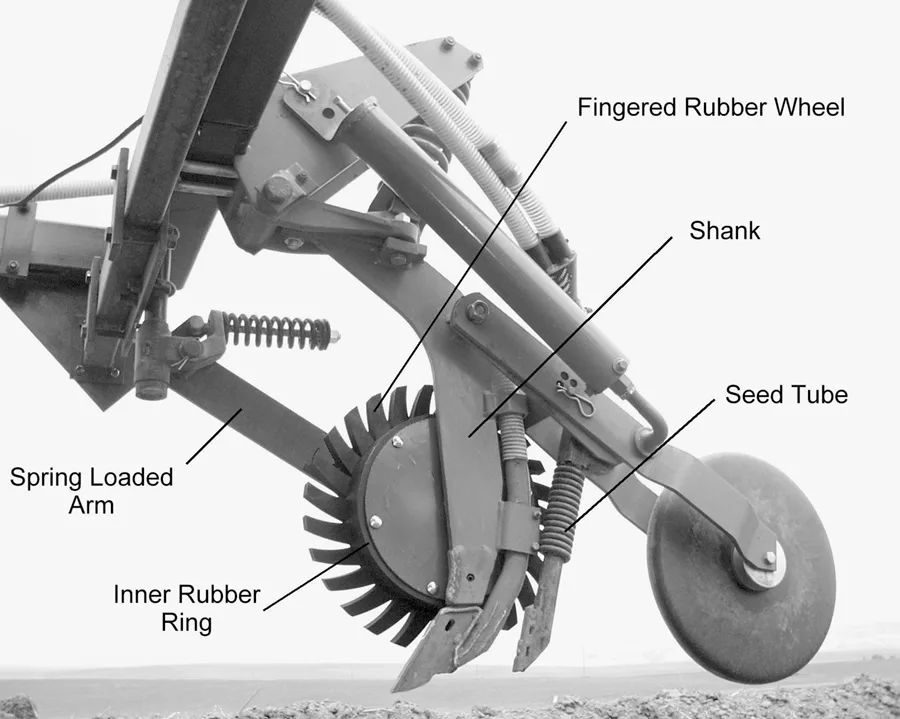
No-till planters face the challenge of navigating dense stubble from previous crops, which exerts significant side loads and shocks on drive components as row cleaners and discs push through debris. Shafts designed with reinforced universal joints and larger crosses effectively absorb these impacts, preventing fatigue that can lead to failures mid-season. In Western Australia’s arid regions, where maintaining residue is crucial for moisture conservation, telescopic designs offer flexibility as planters adapt to ground contours without binding. Overrunning clutches are vital, allowing the shaft to disengage on PTO disconnection to prevent damage from inertia to sensitive metering systems. Wide-angle joints facilitate sharp turns on headlands, common in controlled traffic farming systems that aim to minimize soil compaction. Dust from dry conditions poses a challenge to seals; triple-lip configurations with grease purge paths keep internal components cleaner for longer than basic alternatives. Quick-release yokes expedite implement swaps when transitioning between planters and various tools. Torque limiters calibrated for residue loads engage progressively, safeguarding costly air delivery fans. Balanced assemblies mitigate vibration transmission to frames, maintaining accuracy in variable rate applications. UV exposure on stored machinery can degrade guards; high-impact polymers with stabilizers ensure integrity throughout the year. Safety chains and overlapping shields comply with rigorous farm standards. Length adjustments guarantee safe overlaps, essential when hitches differ among tractor fleets. Friction clutches reset automatically after overloads caused by hidden obstacles, keeping seeding momentum in rocky paddocks. Phase alignment marks simplify reassembly following maintenance. All these features support the intensive usage patterns where planters operate over thousands of hectares each year. Recent material innovations include hardened tube surfaces that resist abrasion from fine particles. Extended-life greases reduce maintenance intervals in remote operations. This combination allows farmers to optimize tight planting timelines without mechanical interruptions.
Adaptation Guide for Dryland No-Till in Darling Downs, Queensland
Queensland’s variable summer climate necessitates shafts that perform well under heat and intermittent wet spells. Enhanced venting systems prevent pressure buildup in humid conditions, while corrosion-resistant coatings effectively manage fertilizer residues. Wide drills demand exceptional torsional rigidity; star-profile tubes offer strength without adding excessive weight that affects transport. Local growers prefer friction clutches that facilitate gradual slip in unpredictable debris conditions. Features for easy maintenance, including accessible grease fittings, cater to large-scale farming operations situated far from service centers. Adherence to Queensland workplace health standards ensures comprehensive guarding. Controlled traffic systems prevalent in the region benefit from low-vibration shafts that preserve wheel track integrity. Fuel efficiency improvements from smooth power transfer accumulate over extensive areas. Overrunning features protect against sudden stops common in undulating terrains. Temperature fluctuations challenge joint performance; needle-bearing crosses maintain functionality from chilly mornings to sweltering afternoons. Dust exclusion is crucial during dry seeding; pressurized systems excel at this task. Local feedback indicates reduced downtime when compared to inadequately specified units. The seamless integration with precision technology requires consistent power delivery; balanced designs support accurate seed placement. Safety audits concentrate on guard conditions in operations that incorporate livestock grazing. This adaptability further supports diverse crop rotations, including sorghum and chickpeas.

Essential Technical Specifications for No-Till Planter Drive Shafts
| Parameter | Value Range | Field Application Note |
|---|---|---|
| Series Rating | Series 6-8 | For 120-250 HP air seeders |
| Continuous Torque | 1400 Nm at 1000 RPM | Fan and metering drive |
| Peak Torque | 2600 Nm | Residue shock loads |
| Operating Angle Standard | 35 degrees | General field work |
| CV Joint Capacity | 80 degrees | Sharp headland turns |
| Closed Length | 1300 mm | Compact storage |
| Extended Length | 1900 mm | Full hitch movement |
| Tractor Spline | 1-3/8″ 21-spline | Modern high-power fit |
| Implement Connection | Flange yoke | Secure fan input |
| Tube Profile | Star or triangular | Torsion resistance |
| Cross Size | 36 x 110 mm | Heavy residue duty |
| Guard Type | One-piece reinforced | Trash deflection |
| Clutch Torque | 1800 Nm slip | Overload safety |
| Weight | 42 kg | Dynamic balanced |
| Balance Standard | G4.0 | Precision seeding |
| Grease Points | 10 | Field accessible |
| Max RPM | 1000 | Air delivery needs |
| Yoke Material | Heat-treated alloy | Impact strength |
| Seal Design | Multi-lip with purge | Dust proofing |
| Chains | Triple link | Guard retention |
| Compliance | ISO 5673 | Australian standards |
| Freewheel | Integrated option | Inertia stop |
| Tube Thickness | 6 mm | Dent resistance |
| Bearing Diameter | 40 mm | Load support |
| HP Continuous 540 | 130 HP | Standard drills |
| HP Continuous 1000 | 200 HP | Wide units |
| Vibration | <1 mm/s | Frame protection |
| Grease Type | High-temp lithium | Extreme conditions |
| Service Interval | 50 hours | Dusty use |
| Customization | Length/flange | Exact fits |
| Outer Diameter | 65 mm | Robust build |
| Coating | Zinc phosphate | Corrosion control |
| Release | Push-pin | Fast attachment |
| Marks | Etched alignment | Easy phasing |
No-Till Cases in Wimmera, Victoria
The diverse seasons of Victoria put shaft reliability to the test, requiring performance adaptability in both dry and wet conditions. Enhanced seals prevent clay buildup, ensuring joints remain mobile. Local practices favor ratchet clutches that provide secure engagement following slips. The integration of livestock on stubble necessitates durable guards capable of withstanding animal damage. Balanced designs minimize fatigue on lengthy runs. Compliance with VicWorkSafe regulations emphasizes operator safety features. Precision placement for canola benefits from low-vibration transfers, while fuel savings accumulate over extensive operations. Overrunning features protect during lift in contoured fields. Temperature fluctuations challenge lubrication systems; synthetic greases ensure consistent flow. Dust from summer fallows necessitates regular checks. Feedback suggests a longer lifespan with correct specifications. The popularity of controlled traffic farming in this region highlights the importance of alignment stability. Quick maintenance procedures are well-suited for mixed farming entities. The versatility of equipment supports a range of crop rotations, including pulses.
Compatibility and Reference Designs
Various no-till planters utilize established powertrain configurations (for technical reference only; Australian Driveshaft Pty Ltd operates as an independent manufacturer). Our shafts align with existing profiles and ratings, providing improved adaptations for local residue management and dust control.
Critical Components and Replacement Items
Maintain an inventory of cross kits, clutch packs, guard segments, and yoke pins. Stock telescopic sleeves, safety decals, and purge valves to ensure readiness.
- Needle crosses suitable for residue applications
- Replacement guards with supporting structures
- Clutch reconstruction kits
- Sealing replacement packs
- Chain assemblies

Grower Insights on No-Till Systems
A farmer from Darling Downs shared that upgraded shafts equipped with enhanced sealing effectively eliminated dust-induced failures that had previously disrupted seeding. Covering vast areas now proceeds without interruptions. In the Wimmera, another grower noted that wide-angle performance on slopes maintained power effectively, avoiding issues that plagued older models.
Complementary Gearboxes from Australian Driveshaft Pty Ltd
Our gearboxes integrate seamlessly with no-till planter shafts, providing reduction and distribution for fans and metering systems. Bevel gear units accommodate angle changes for offset drives, while spiral gears operate quietly over extended seeding periods. Sturdy housings absorb vibrations from openers, and worm designs allow precise control for variable rates, with self-locking features maintaining settings. Bronze components are resilient against dust abrasion. Multiple outputs effectively serve both seed and fertilizer independently. Planetary gearboxes manage high torque in wide machinery and are compact with excellent efficiency. Cooling fins operate effectively in hot conditions. Parallel shaft options facilitate smooth inline metering. Combined reducers simplify frame folding, distributing power evenly to wings. Quick ratio adjustments cater to different crops. Magnetic plugs capture particles, extending oil life. High-ratio settings for hydraulic pumps maintain pressure stability and are sealed against moisture. Ventilation systems help regulate pressure levels. Aluminum construction reduces weight while ribbed designs add strength. Sensors enable predictive monitoring, and modular swaps allow field ratio changes. Fine steps in multi-stage designs ensure precision, while low backlash supports GPS accuracy. Coastal corrosion resistance is provided through specialized coatings. Heavy castings support extreme widths, and dual input options are available for auxiliary functions. Oversized bearings absorb shocks, and compact helical designs fit into tight spaces. Efficiency improvements translate to fuel savings. Custom flanges facilitate legacy equipment. Baffles ensure consistent lubrication, while thermal valves provide sealing protection. Variable belts allow for on-the-go adjustments, and electronic integration with tractors enhances usability. Abrasive-resistant bronze worms endure tough conditions. Aligning mounts offer flexibility, and easy-drain designs simplify changes. High-capacity fans enhance airflow for pneumatic functions. Balanced designs minimize vibrations, and overrunning systems allow for freewheel disengagement. Pre-set torque settings align with planter specifications, accommodating a range of 50-400 HP across all scales. Local refinements address dust and heat challenges, promoting sustainability and recyclability with low-friction designs. Documentation ensures compliance and optimized systems foster trust among users.
Frequently Asked Questions
How do I size a shaft for a wide no-till planter?
Measure in the working position, ensuring a minimum overlap of 300mm.
Which series is suitable for a 200 HP air seeder?
Opt for Series 8 to allow a margin when dealing with heavy residue.
What is the best greasing practice in dry conditions?
Grease every 20 hours with a purge until clean grease flows out.
How can I troubleshoot vibration issues?
Inspect for phase alignment and cross wear.
What clutch type is best for handling trash?
Friction clutches are preferable for smooth slip and automatic resetting.
How do I cut the shaft to the correct length?
Make equal cuts on the tube, followed by professional balancing.
What are the guard requirements?
Ensure full shielding with chain attachments per applicable standards.
What advantages do CV joints provide?
They maintain constant power delivery at various angles.
How can I ensure a safe connection?
Align, lock, and perform a pull test.
How can I prevent residue-related failures?
Conduct regular inspections and use quality components.
Recent Developments in Australian No-Till Practices
Forecasts indicate robust potential for the 2025-26 cropping season, bolstered by improved moisture levels that support the expansion of no-till methods. The focus on safety and guarding continues to evolve. Innovations in wide drills drive reliable power transmission demand.